Mead is a two-stage craft: the cauldron makes a mead base and the fermenter turns that base into a drinkable bottle over in-game days. Hives supply renewable honey, and a row of fermenters removes the only real bottleneck.
Turnip seeds come from the Swamp, not from your own farm, so one gathering trip starts the loop. Turnips share the cultivator and soil with carrots and supply better cooking plus steady boar feed once the field is fenced and rotated.
Carrot farming needs a forge-made cultivator, seeds from wild plants, and open sky above the patch. Each harvest returns carrots plus new seeds, so a small fenced field compounds into a permanent food and boar-feed supply.
Lox taming is wolf taming scaled up: a pen that can survive a charging animal, barley instead of meat, and a long wait in a hostile biome. Earth walls and a pit beat wood, and one bred pair supplies everything after that.
Wolf taming needs three things at once: a container the wolf cannot escape, raw meat on the ground, and a player nearby. Build the pen of earth or stone, never hit the animal, and breed two-star wolves for a permanent pack.
Repairs cost no materials, only a walk to a crafting station. Weapons, tools, shields, bows and boats lose durability while armour does not, and a ten-wood field workbench turns any safe spot into a repair point.
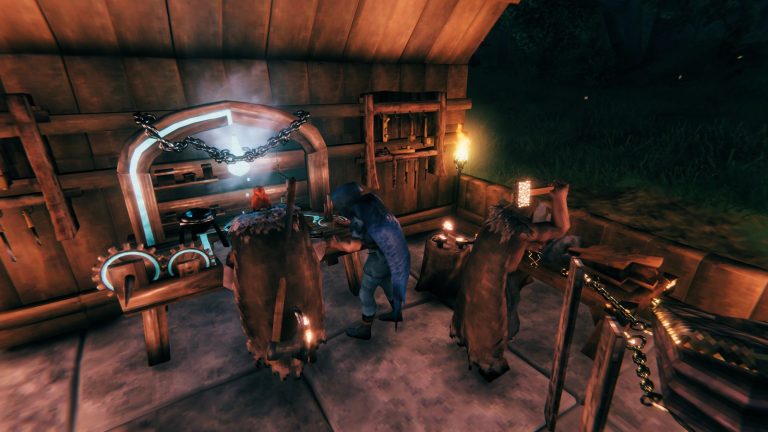
Each workbench upgrade station adds exactly one level and only counts when it sits inside the workbench build radius. The station chain tracks biome progression from flint and leather through bronze and iron, so a stuck workbench usually means missing infrastructure rather than missing exploration.
Standard wooden portals block restricted metal cargo. Check the world's portal modifier and the departure portal type before planning an ore route; later stone portals change the transport options.