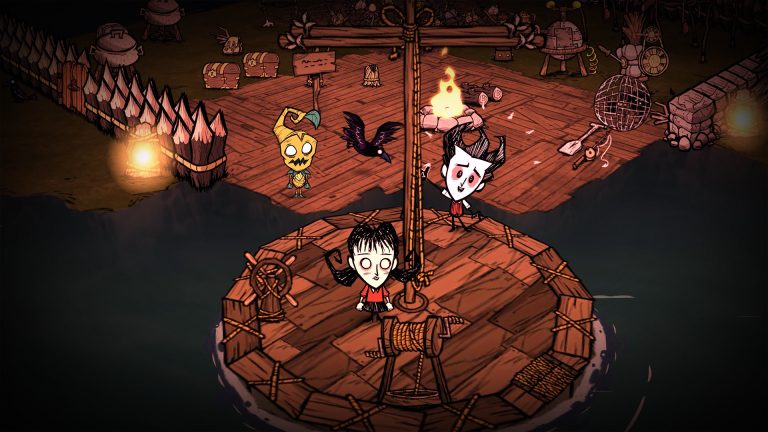
Don’t Starve Together: How to Build a Reliable Food Supply
Three stacked layers of food: renewable plants, a safe meat source and a crock pot, plus how to survive winter without them.
Quick answer: wormholes in Don't Starve Together come in linked pairs. Walk into one and you are dumped out of its partner somewhere else on the map, instantly — at the cost…
Boat kit, steering wheel, sail and anchor, why hulls fail, and how to provision a voyage like a cave expedition.
The science tier, the firefly that gates the recipe, refuelling, and when a miner hat beats a lantern.
The three-nutrient soil model, family bonuses and giant crops, and how to rotate plantings so a plot never collapses.
How to pick a character by the weakness you can live with, which picks suit a first world, and why groups want complementary constraints.
Salves, poultices, healing food and revival items, plus why armour prevents more damage than any cure can undo.
What a thermal stone stores, how to charge it at a fire, how to chill it in summer, and why it never needs replacing.
The two-stage descent that leads to the Ruins, what to pack for it, and how light and sanity decide whether the trip succeeds.
Deerclops arrives in winter with a moan and targets the nearest structures before it targets you, so the fight has to happen away from base. Bring armour, healing, warmth and light, then bait the swipe and hit two or three times per exchange.
Domestication rises while a Beefalo is ridden or fed and decays when it is neither, so taming is a daily routine rather than one big action. A finished mount adds speed, damage absorption and a weapon, and stops going into heat.
Hound waves arrive with a growl, spawn near a player and scale with world age, so building defences is not optional. A tooth trap kill zone turns waves into a resource, while Red Hounds demand open ground because they burst into fire on death.