TL;DR: Plant a small first crop, water it each morning, and leave enough time and energy to fish, forage, or visit town. Keep a few useful items in a chest, check how many days remain before a season ends, and expand your farm when your routine can support it.
This Stardew Valley beginner guide gives you a manageable first spring rather than a rigid schedule. Your first objective is a farm you can maintain without spending the whole day watering. A missed birthday or unfinished bundle does not mean you need to restart your save.
The advice covers the unmodded game and its 1.6 systems. Farm maps, platform controls, multiplayer timing, and personal goals change the details, so read the descriptions in your own menus before buying equipment or committing resources.

On this page
Stardew Valley Beginner Guide: Start with a Small Crop Plot
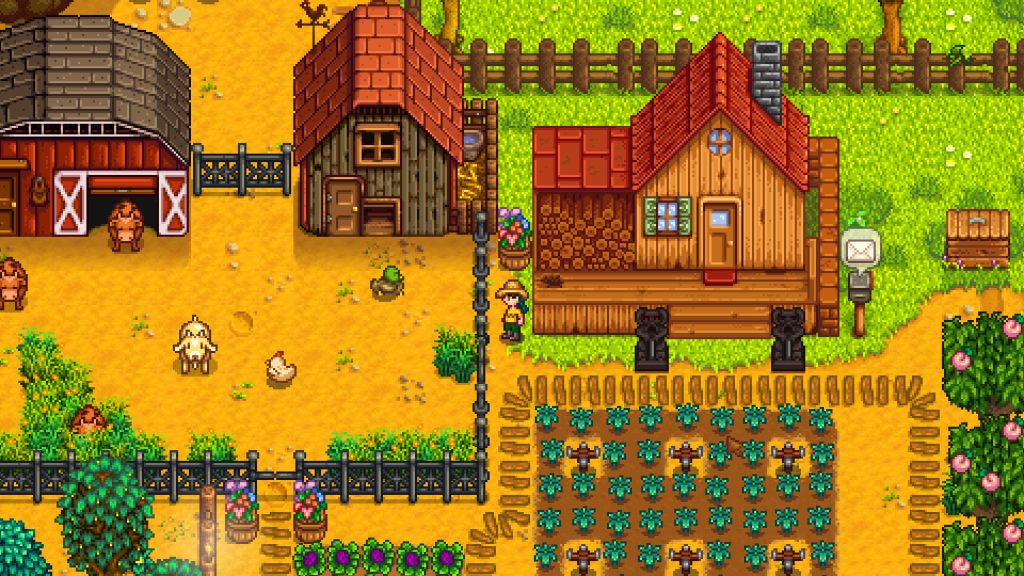
Start by clearing enough weeds, stones, and branches for your first seeds. Use the hoe to prepare soil, plant your starter parsnips if your farm provides them, and water each planted tile. Farm maps can change starting supplies, so work with what your save actually gives you. Clearing the entire property immediately uses energy that you could spend on earning money or learning the town.
Work in a shape that is easy to water. A compact rectangle makes missed plants more obvious than scattered patches around obstacles. Leave room to walk between your crop area, house, and farm exit. You can redesign this space later as your tools and sprinklers improve.
Do not spend all your remaining money on seeds simply because empty land is available. Every extra crop adds a daily job until you automate watering. Keep the first expansion small enough that you finish farm chores with room for one other activity.
Plant a little variety when you can afford it. In the standard Community Center, spring crop donations include parsnip, green bean, cauliflower, and potato. Green beans grow on a trellis that blocks walking, so put them where they cannot trap you away from another plant.
2. Use a Simple Morning Routine
Check the television, inspect crops, water the ones that need it, and collect anything ready to harvest. The weather forecast helps you plan tomorrow; other television programs introduce recipes or useful game advice. A brief check takes less effort than discovering a deadline after leaving home.
Rain usually handles watering for ordinary outdoor crops. Use that saved time for a mine trip, fishing, or a longer errand. Indoor greenhouse crops still need water on rainy days, so do not carry the outdoor rule into that building once it is repaired.
Walk through each row and look at the soil rather than assuming every swing connected. An unwetted tile is easy to miss when a crop sprite covers it. If a plant fails to progress with its neighbors, check watering before concluding that it is broken.
Choose one main task after chores. For example, buy seeds and forage around town, or bring food and spend the remaining day in the mines. Trying to complete farm work, a long fishing session, a mine push, and every villager visit creates more travel than progress.
| Situation | Useful next action | Why it helps |
|---|---|---|
| Sunny day with many crops | Water first, then take a short local trip | Protects the work already planted |
| Rainy day | Plan a longer trip with food | Outdoor watering takes less of the day |
| Low energy, several hours left | Talk to villagers or organize storage | These jobs do not require repeated tool use |
| Only a few days before the next season | Check seed growth times before planting | Avoids buying a crop that cannot finish |
3. Treat Time and Energy as Separate Budgets
Energy limits how much tool work you can do, while the clock limits when you can do it. A full energy bar does not make it sensible to start a distant trip late at night. Likewise, an early afternoon with almost no energy calls for food or a less demanding task.
Carry food before an extended fishing or mining session. Read its energy and health values instead of assuming that every edible item is equally useful. Some forage is handy emergency food; an item intended for a bundle or a birthday deserves a separate place in storage.
Aim to return home with a margin before the overnight cutoff. The route that seemed short in the morning can take longer when you need to leave a mine, cross town, and find your way through an untidy farm. Returning earlier is a reasonable beginner habit.
Do not deliberately work through exhaustion because a guide promises an ideal opening. It is better to plant fewer crops and keep a comfortable daily rhythm. Later watering improvements let you increase production without repeating the same amount of manual work.
4. Build Storage Before Your Inventory Becomes a Problem
Make a chest early and put it near your normal farm route. Keep building materials, potential donations, and useful food there. Inventory space fills quickly with tools, fish, forage, and mine loot, and repeatedly throwing things away makes exploration frustrating.
Give each chest a job as your collection grows. One can hold wood, stone, ore, and coal; another can hold crops and other items you are checking for bundles. Simple organization is enough. You do not need a perfect color system before leaving the farm.
Keep at least one ordinary-quality example of an unfamiliar crop, forage item, or fish until you check its use. That is a cautious starting rule, not an instruction to hoard everything forever. Once you know whether an item is needed for donations, crafting, food, or gifts, decide what to sell.
The shipping bin sells items rather than storing them. Use a chest for something you want to keep. If you are tired or rushing to bed, postpone a questionable sale until tomorrow instead of dropping a needed donation into the bin.
5. Earn Money Through More Than One Activity
Crops are only one opening income source. Fishing and foraging let you earn while waiting for a harvest, and they help you discover the map. If watering already takes most of your energy, adding more seeds can make your immediate problem worse.
Fishing is difficult at a low skill level because the catching bar is small. Willy sells a Training Rod for 25g, which makes common fish easier to catch while you learn. It has limits on fish selection and quality, so treat it as a learning tool rather than a permanent upgrade.
Forage along routes you already need to travel. A trip to the mountains can include a few nearby items without becoming a full-map sweep. Keep the standard spring forage donations in mind: wild horseradish, daffodil, leek, and dandelion.
Compare a purchase with the problem it solves. A backpack upgrade reduces inventory interruptions; seeds increase future crop output; a better tool can reduce a repeated chore. There is no reason to follow an exact purchase order if a different bottleneck is slowing your own farm.

6. Read Crop Growth Times Before Buying Seeds
Ordinary seasonal crops do not survive a change into an incompatible season. Before planting, count the days left and read the seed packet. A crop needing more growing days than remain will not provide the harvest you bought it for.
Leave a small buffer if you are uncertain about the calendar or your watering consistency. Planting a fast crop earlier is easier to manage than planning a harvest on the very last possible day. If you miss the window, keep the seeds for a suitable season instead.
Regrowing crops need a first growth period, followed by shorter intervals between later harvests. Their value depends on how many harvests you can actually collect. Buying one near the end of its season is different from planting it early and maintaining it all month.
Keep seasonal donations before selling the whole harvest. The standard Pantry asks for spring, summer, and fall crops, with a separate quality crop bundle. Our Community Center bundle guide explains which items are time-sensitive and how the donation slots work.
7. Explore the Mines in Manageable Trips
Bring a weapon, pickaxe, food, and some empty inventory space when the mines become available. A mine visit adds both combat risk and an energy cost. Ore and coal matter for future upgrades, but getting knocked out while carrying everything from the farm is an avoidable complication.
Use the mine elevator’s unlocked stops rather than walking the opening floors every time. A small amount of lasting floor progress can be more useful than an ambitious trip that leaves you too tired to continue. Check health separately from energy while fighting.
Bring home materials without immediately converting every piece into a project. Tool upgrades, crafting, and farm buildings draw on overlapping supplies. Read the actual recipe or upgrade request before deciding which material is safe to sell.
A rainy day is convenient for mining because outdoor watering is handled, but it is not an obligation. If you lack food or a comfortable weapon, use the day to prepare. Progress remains available on another day.
8. Meet Villagers Without Turning Every Day into a Tour
Talk to villagers along your normal routes. Conversation contributes to friendship, and their dialogue helps you learn schedules and gift preferences. You can make steady progress with a few familiar people before trying to maintain relationships with the entire town.
Check the calendar for birthdays and save an appropriate gift in advance. A birthday multiplies ordinary gift effects, including negative ones. An item someone loves is helpful; an expensive item they hate is still a bad gift.
The Social tab shows gift checkboxes, and the Gift Log records learned preferences. Normal gifts are limited to one a day and two a week per villager, with the gifting week beginning on Sunday. Our friendship guide covers the exceptions and heart limits.
Common First-Spring Mistakes to Avoid
Planting more than you can water is the easiest way to make the farm feel like a chore. Reduce the next planting rather than treating a tiring routine as a permanent commitment. Our sprinkler layout guide helps you plan automation as those recipes become available.
Another common mistake is expecting every objective to finish in year one. The Community Center includes seasonal and progression-dependent items, and a first save is also time spent learning. Missing one item usually means planning a later opportunity, not losing the game.
For tomorrow, choose a crop area you can maintain, one destination, and one item you need to keep. That gives the day a purpose without requiring a minute-by-minute route.
Frequently Asked Questions
Should I restart if my first week was inefficient?
Usually no. The farm keeps developing over later days and years. Keep playing unless you want to change a major save choice, such as the farm map, for your own enjoyment.
What should a beginner prioritize first?
A manageable crop plot, dependable watering, a storage chest, and learning the nearby routes. Once those work, spend money on whichever upgrade removes your largest daily interruption.
Do I have to complete the Community Center in year one?
No. Year-one completion is an optional challenge. Standard bundles can be finished over a longer save, and a missed seasonal item can be collected when its season returns.
Is the Training Rod worth buying?
It is useful if the opening fishing minigame feels too difficult. The larger effective catching bar helps at low skill, but its common-fish and normal-quality restrictions mean you should switch rods when you need different catches.
Sources and Game Scope
This guide covers unmodded Stardew Valley and relevant 1.6 systems. The official wiki and listed reference material were read on November 11, 2026. Use your save’s own bundle configuration and platform controls.