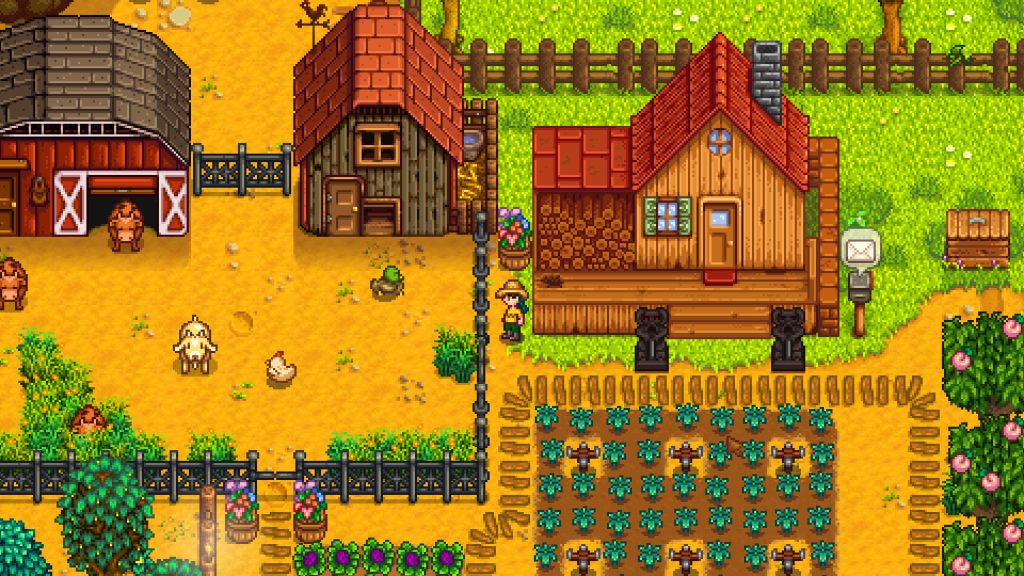
Raise animal friendship in Stardew Valley by petting your animals regularly, keeping them fed and letting them eat accessible outdoor grass when conditions allow. Use the animal’s information window to check its hearts and current status. High friendship helps production, but hearts are only one part of care: hunger, mood, maturity and the species’ schedule also matter.
A dependable routine starts with a manageable number of animals. Check feed, pet them, collect products and give them safe access to pasture in suitable weather. Add automation when it supports that routine. An empty silo or neglected barn can undermine an expensive animal purchase regardless of how profitable the species looks on paper.
Separate friendship, mood and feeding
| Care factor | What it represents | Useful check |
|---|---|---|
| Friendship | Longer-term relationship shown as hearts | Open the animal information window |
| Mood | Current condition affected by care and environment | Read the status description |
| Feeding | Whether the animal has eaten for the day | Pasture access or available trough hay |
| Maturity and schedule | Whether this species is ready to produce | Check age and expected product interval |
Friendship is displayed as five hearts, but daily mood is a separate value. A high-heart animal can still have a bad day if it is hungry or care conditions are poor. Likewise, a happy young animal may not yet produce because it has not matured. Read the combination instead of treating a missing product as proof that hearts fell.

Pet each animal regularly
Interact with an animal before its sleeping period to pet it. A subsequent interaction opens the status window rather than providing another full daily petting gain. Repeatedly clicking the same cow is therefore not an efficient friendship strategy. Move through the group and make sure each animal receives attention.
Indoor morning petting can be easier because the animals are in a compact space. If you close the animal door overnight after everyone is inside, pet them the next morning before reopening it. Keep this as a convenience routine rather than closing the door while animals are still returning.
Milking and shearing with the appropriate tools also contribute to the documented friendship system. Collecting products still needs to match the animal: eggs are picked up, while some products require a tool until suitable automation is available. A deliberate daily collection route keeps missed animals easier to notice.
Make feeding reliable
Animals need food even while young. Outdoor grass can satisfy feeding when they can reach and eat it under suitable conditions. Indoor hay on the feeding bench provides the backup when they stay inside. Owning hay somewhere on the farm does not help if it never reaches the feeding arrangement.
A silo stores hay collected through the supported grass-cutting system, and the indoor hopper lets you take hay for the feeding bench. Deluxe animal buildings provide automatic feeding from silo stock. The stock can still run out, so check the actual remaining hay rather than assuming the auto-feed upgrade creates unlimited food.
Hungry animals do not simply disappear from starvation under the standard rules, but hunger harms friendship and mood, can delay growth, and can prevent a scheduled product. Preventing that disruption is easier than rebuilding lost progress. Make hay checks part of the morning routine before leaving for a long mine trip.
Provide pasture without losing the reserve
In suitable non-winter weather, open the animal door and provide accessible grass outside. Eating outdoor grass supports care beyond replacing a hay meal. Blue grass has additional documented friendship benefits in modern versions, making the Meadowlands arrangement especially convenient when used properly.
Protect enough grass to keep a pasture renewing rather than cutting the entire area clean. Keep access paths open and avoid placing all grass behind obstacles animals cannot navigate. A decorative green patch is not useful feed if the animals cannot actually reach it.
Rain and winter change outdoor behavior and feeding needs. Maintain indoor hay even when pasture usually handles the animals. If you are away exploring the island, confirm that the home farm has the required care infrastructure; island access does not remove the needs of animals elsewhere.
Use winter shelter and safe doors
Place a heater in each relevant animal building for winter care. One heater’s effect belongs to its building rather than automatically covering every coop and barn. Keep hay available and pet the animals indoors because ordinary winter pasture is not the normal feeding solution.
If you close animal doors, wait until the animals have returned. The encyclopedia describes negative consequences and possible nighttime problems for animals left outside. Pathing details can vary, so a clear practical rule is to check the building rather than closing it blindly at the first evening opportunity.
Closing a door is not a replacement for feeding or petting. It can simplify the following morning’s indoor care, but an animal with no food remains neglected inside a secure building. Use the door, heater and feed as parts of the same routine.
Know what automation actually replaces
An Auto-Grabber collects eligible products; it does not perform every aspect of animal care. An Auto-Petter supports daily petting behavior, but its friendship progress and interaction with manual petting should not be mistaken for unlimited stacking. Feeding and suitable conditions remain necessary regardless of those devices.
Manual attention can still be useful with an Auto-Petter, particularly while building friendship. Do not assume installing automation means you can ignore status windows forever. Check each building occasionally to confirm hay, products, hearts and the devices’ intended operation.
A Golden Animal Cracker can permanently improve output for supported animals, with pigs excluded under the documented rule. It is an output enhancement rather than a substitute for care. Apply such an item after deciding the animal and building fit your long-term farm plan.
Read missing products correctly
Different animals have different maturity and production intervals. Chickens and cows do not establish the schedule for ducks, goats, rabbits or dinosaurs. A healthy goat that does not produce every day may be following its normal cycle rather than suffering a friendship problem.
Large products, specialty drops and quality depend on additional conditions and chances. High hearts improve the situation but do not make every rabbit produce a Rabbit’s Foot each morning. Avoid rebuilding a barn around an expectation that a rare product becomes a fixed daily output.
Pigs are a special case because truffles depend on their outdoor activity and conditions. Winter or bad outdoor circumstances affect that route differently from indoor milk or eggs. See barn versus coop when choosing animals for the season and infrastructure you can support.
A short daily checklist
- Check silo stock and the indoor feeding arrangement.
- Pet each animal that needs manual attention.
- Collect the correct products or check the Auto-Grabber.
- Open pasture access when conditions are suitable.
- Read the status of any animal with unexpected production.
- Confirm animals are inside before closing the door for the night.
Reserve some products for cooking or processing before shipping everything. Cooking ingredient storage helps keep routine milk and eggs available while protecting special products. A cared-for animal group is more useful when its outputs fit the rest of your farm.
Frequently asked questions
Does an Auto-Grabber raise friendship?
Product collection automation is different from petting. Use manual care or the appropriate petting device and continue to check feeding and mood.
Why is a five-heart animal unhappy?
Friendship hearts and current mood are separate. Check food, weather, shelter and whether the animal was left outside before assuming the heart display is wrong.
Can I skip hay when I have grass?
Keep a backup. Animals must actually reach and eat suitable outdoor grass, and rain, winter or a depleted pasture can leave the indoor feeding system responsible for the day.