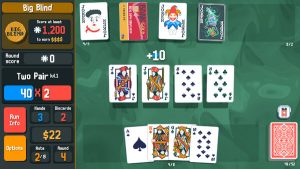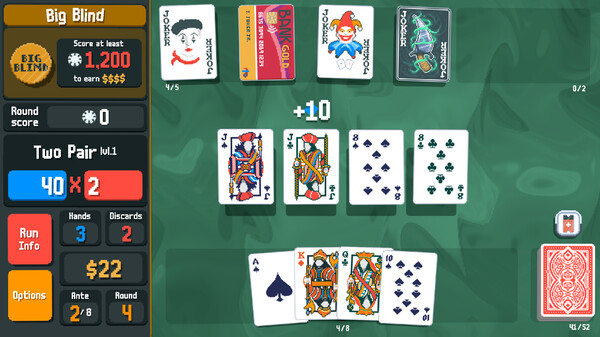
Quick answer: Level the recognized hand your deck can repeat, check its base in Run Info, and pair the upgrade with suitable Jokers. Keep classification, draw consistency, and hand level as separate decisions.

On this page
Balatro poker hand leveling guide: improve the hand you use
Choose a main hand that your current deck produces reliably, then level that recognized type through appropriate Planets or other level effects. Inspect its current base Chips and Mult in Run Info. Match the hand with Joker conditions that reward the same action, and review the coming boss before spending all resources on one route. A level is useful when the hand can actually be drawn, played, and allowed to score.
This guide focuses on choosing and maintaining a hand-leveling strategy, using the retrieved original-game hand and upgrade references. It is not a personal win-rate test or a claim that one poker hand always wins. Cards, modifiers, deck rules, stakes, and boss restrictions change the decision. Planet names are tools for the plan; the more important question here is which hand deserves the next investment and why.
| Question | What to inspect | Practical implication |
|---|---|---|
| Which hand is reliable? | Draws, discards, and deck composition | Favor usable levels |
| Which name scores? | Recognized hand label | Higher classifications take precedence |
| What does a level add? | Base Chips and Mult | It changes scoring, not card draws |
| What grows beside it? | Joker triggers and counters | Keep the same action coherent |
| What can stop the main hand? | Upcoming boss rule | Maintain a realistic backup |
1. Pick a main hand from the current deck
Inspect the ranks and suits already available and notice what your recent draws produce. Pair or Two Pair can be realistic early targets, while a suit-focused deck can make Flush more consistent. Do not choose a hand solely because its Level 1 base is higher. The score of a hand you cannot assemble contributes nothing to the current Blind, and repeatedly spending every discard on it can leave few options for recovery.
Let new cards and effects influence the plan without changing direction for every shop offer. A Joker that strongly rewards a different action can justify a deliberate transition. An unrelated Planet at an attractive price may not. Before switching, ask whether the new hand is now reliable, whether existing levels still have useful value, and whether your current Jokers can support it. A coherent ordinary route is often easier to develop than several half-finished strategies competing for the same money.
2. Use the recognized classification as the actual target
Higher-ranked classifications take precedence over lower hands regardless of their levels. A highly leveled Pair does not make a played Full House score as Pair just because it contains matching ranks. Check the displayed name before confirming the play. The distinction also affects Jokers that require the hand to be a specific type rather than merely contain a smaller combination.
Royal Flush shares leveling with Straight Flush, so Neptune develops the relevant base rather than requiring a separate Royal Flush upgrade. Secret hands have their own types and availability conditions. Keep the game’s classification list open when the result is unclear instead of translating only from familiar poker language. Your intended hand and the game’s recognized hand must match for the level investment and hand-specific triggers to work as expected.
3. Evaluate the increase to both sides of the base
A hand level changes base Chips and base Mult. Their combination then contributes to final scoring alongside the actual cards and triggered effects. As a base-only arithmetic illustration, Level 1 Pair begins at ten Chips and two Mult, while one Mercury upgrade produces twenty-five Chips and three Mult. The products are twenty and seventy-five before any playing-card Chips, Jokers, or modifiers. These are explanatory calculations, not recorded gameplay results.
That distinction prevents a misleading comparison based only on one addition. A Planet can improve both parts of the base, and existing Joker effects can change which part is most useful. Inspect the current numbers and the scoring loop rather than assuming every extra level has equal practical value across hands. A larger nominal improvement still depends on playing the hand reliably. The in-game state is the best reference for the base you have actually developed during this run.
4. Use hand levels beside the Joker loop
Supernova adds Mult according to how often the scoring hand has been played during the run. That can complement repeatedly playing one leveled type: the hand base grows through upgrades while the Joker grows through use. The two systems remain separate. Raising the level does not itself count as another played hand for a play-counter condition, and merely playing the hand does not ordinarily make every level increase.
Other Jokers can reward different triggers such as a particular rank, suit, discarded hand, or repeated action in the same round. Check those exact conditions before treating them as interchangeable hand support. A specialized Joker can make a smaller hand effective without requiring a high-ranked combination. Judge the total loop: how you draw it, what level supports it, and which effects activate. A famous hand label without a functional trigger chain can be less useful than a modest type with clear support.

5. Consider upgrade sources beyond ordinary Planets
Planets are the usual hand-level source, but the hand reference also lists Orbital Tags, Black Hole, Burnt Joker, and Space Joker. Read each effect’s own trigger. Burnt Joker upgrades the first discarded poker hand of a round, so deliberate discard classification matters. It does not ask for the same action as a Planet purchase or a normal scoring play. The level is attached to the recognized discarded hand.
Black Hole upgrades all hands and is a Spectral card. Constellation’s Planet-use growth therefore does not apply to it, despite the hand-level result. This is an example of related outcomes with different events: increasing a hand level and using a Planet are not the same trigger. When you have a synergy that depends on the event, choose with that distinction in mind. Do not infer an effect merely from a pack color or an upgrade animation that looks similar.
6. Keep a realistic backup for restrictions
Inspect the upcoming boss rule before committing every purchase and discard to the main hand. Bosses can debuff selected cards or restrict which plays count. A high level remains part of the run, but the hand still needs legal active scoring cards and a permitted classification. An upgrade cannot remove a restriction that stops the intended play from contributing.
The backup should be something the current deck can actually form and the current Jokers can partly support. It need not receive the same investment as the main route. Choose whether a modest alternate level, a flexible Joker, or a card adjustment answers the particular boss. Avoid trying to level every hand equally just in case; that can weaken the main plan without creating a useful substitute. Prepare for the actual restriction rather than an imagined list of every possible encounter.
7. Review levels after unusual effects
Open Run Info after using an upgrade or meeting a boss that changes hand levels. The current state can differ from the number you remembered earlier in the run. The hand reference identifies The Arm as a source of level reduction. Check the boss effect and the displayed level instead of assuming a previously purchased Planet failed to apply.
If a scored result is unexpectedly small, inspect the recognized hand, active cards, level, and Joker conditions in that order. A different classification can explain why the preferred base was not used. A debuff can explain why card-based triggers were absent. A mistaken round or run counter can explain a missing Joker benefit. Diagnosing these separate questions is more useful than repeatedly buying the same Planet while overlooking the actual scoring problem.
Decide whether to continue or pivot
Keep leveling the main hand when it remains reliable, its Jokers still work, and the next upgrade provides useful score for the coming target. Consider a pivot when the deck has meaningfully changed or a new tool supplies a more coherent route. Compare the remaining opportunities and money with the investment required. A late switch that needs several unavailable pieces may be less practical than refining a functioning existing build.
Questions about hand levels
Does leveling improve the chance of drawing the hand?
No. Ordinary level increases change the hand’s base Chips and Mult. Draw consistency comes from the actual deck, available draws and discards, and effects that change those systems. Develop both parts of the plan separately.
Can a high-level Pair override Full House classification?
No. The reference says higher classifications take precedence regardless of levels. Check the displayed hand name before playing and make a genuine Pair when that recognized type is required by your plan.
Should every run use one hand exclusively?
Not necessarily. A clear main hand helps focus investment, but a realistic backup can address a specific boss or draw problem. Choose an alternate route with actual support instead of dividing money evenly across every type without a reason.
Sources and scope
Sources read November 11, 2026. Mechanics come from the identified community references. Practical advice is editorial. No personal playtest, search-volume measurement, traffic result, or CMS score is claimed.