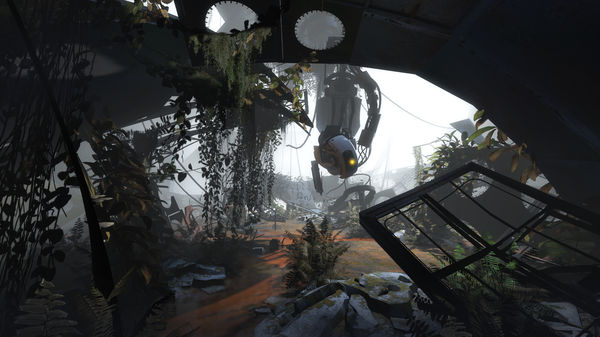
Quick answer: Pick Portal 2 for two-person spatial puzzles, We Were Here Forever for voice-led mysteries, or Escape Simulator for a small online escape-room group.

On this page
Best co op puzzle games: choose the kind of teamwork
The strongest starting point is Portal 2 if you want two people solving the same spatial problem. Choose We Were Here Forever when describing separate information is the attraction. Escape Simulator is a better fit for a small group that wants everyone searching a room. Trine 4 and It Takes Two add more jumping and action, so they suit players who want puzzles woven into an adventure.
These are editorial recommendations based on the games’ official storefront descriptions, rather than a claim that every option has been personally tested. The criteria are player count, information sharing, movement demands, local versus online play, and the commitment needed to finish a session. A clever puzzle is not automatically a good choice for your team: the available screens and everyone’s comfort with a controller can matter more than the theme.
| Game | Group or focus | Play arrangement | Decision factor |
|---|---|---|---|
| Portal 2 | Two | Dedicated co-op campaign | Spatial reasoning |
| We Were Here Forever | Two | Online, microphones required | Describe different clues |
| Escape Simulator | Small online group | Online rooms | Search and compare clues |
| Trine 4 | Group co-op | Local or online | Puzzles plus platforming |
| It Takes Two | Exactly two | Local or online | Action variety and story |
Portal 2: a clear two-person starting point
Portal 2 has a dedicated two-player cooperative campaign with its own characters and test chambers. That makes it a useful choice when you want a designed sequence of shared problems rather than a single-player campaign with an extra person attached. Both players use portals, and progress asks you to coordinate positions, routes, and timing. Treat the room as a joint diagram: identify the destination, work backward through the obstacles, and explain the planned sequence before pressing a switch.
The limitation is that this particular campaign has two places. A third friend cannot become a third robot in the same run. It is also a first-person game, so players who dislike navigating in that perspective should take that seriously. Start with the official cooperative chambers before choosing community creations, because custom maps can presume skills or coordination that the opening campaign teaches more gradually. Online co-op and split-screen are separate setup choices on the Steam listing; check the controls needed for your arrangement.
We Were Here Forever: make communication the puzzle
We Were Here Forever is built around two partners who must act as each other’s eyes and ears. Its official description specifies a cooperative-only game, a working PC-compatible microphone for each player, and an internet connection. Select it when your favorite part of a mystery is translating symbols, comparing descriptions, and figuring out what another person can see. Agree on a simple naming system for shapes and positions before a tense sequence begins.
The same separation that gives the game its identity is the practical drawback. A silent partner, an unreliable microphone, or two people trying to communicate only through occasional chat messages can undermine the intended experience. The castle setting also includes threat and tension, which may be unsuitable for someone seeking a completely gentle puzzle evening. Reserve uninterrupted time and test audio first. Do not assume that owning another We Were Here entry unlocks this one: the series contains separate games, including a different free pilot.
Escape Simulator: a room for a small online group
Escape Simulator emphasizes examining objects and working through interactive escape rooms. Its official page says all rooms can be played in online co-op and recommends up to three players for built-in rooms, while allowing more. That makes it especially useful for a trio that wants collaborative clue hunting without forcing someone to spectate. One player can inspect a book while another compares a mechanism and the third gathers nearby objects.
More participants can create more interruptions as well as more ideas. Tell the group when you move a clue and keep related objects in a recognizable area so everyone can follow the same line of reasoning. Community rooms are a separate variable: the store warns that some large rooms need more memory and a better graphics processor. Begin with built-in content when checking whether everyone’s computer and puzzle preferences fit. The room editor and Workshop extend the selection, but they do not guarantee consistent difficulty, performance, or a particular group size.

Trine 4: combine abilities with movement
Trine 4: The Nightmare Prince mixes fantasy puzzles and platforming around three recognizable heroes. Its Steam listing includes both online and shared-screen cooperative play. Choose it when your group wants to manipulate a scene, cross obstacles, and use different abilities rather than spend the whole evening reading codes. Discuss who is trying which tool before everyone starts moving the same puzzle pieces. A brief plan makes an interactive scene easier to understand.
Its movement and action are the tradeoff. A person who enjoys a static escape-room puzzle may find platforming less comfortable, and a fast player can accidentally set the pace for everyone else. Keep the group together and allow time for experimentation. Check the cooperative mode and player settings instead of assuming that three named heroes establish the exact rules for every mode. The Melody of Mystery expansion is sold separately according to the current storefront, so establish whether your intended levels belong to the base game before organizing a purchase.
It Takes Two: puzzles inside a varied adventure
It Takes Two is a cooperative-only adventure made for exactly two players. Its official description highlights a changing selection of challenges, a shared story, and local split-screen or online cooperation. It is a good choice when one couple or pair wants a continuing campaign with puzzles, movement, and changing activities. Expect both people to participate: this is not simply one player solving everything while the other supplies an occasional extra button press.
The major limitation is the action requirement. A partner who wants only quiet logical puzzles may prefer Portal 2 or Escape Simulator instead. The story’s relationship conflict is another factor to consider when selecting an evening’s entertainment. The Friend’s Pass provides a route for an invited partner, but the pass’s edition and platform conditions should be checked on EA’s current page. Do not call the entire campaign a permanently free game because a guest download exists. Confirm the host owns the required game and that both players use compatible versions.
Set up the first session before committing to a campaign
First count active players and available screens. Eliminate games that cannot include everyone in the intended mode. Then choose whether you want shared visual information or deliberately separate clues. Test microphones for a voice-led game and controller comfort for an action-heavy one. Download the same game and required content before the meeting, because similarly named editions and expansions can create an avoidable mismatch.
For your opening session, choose built-in beginner content and agree that hints need group consent. One person reading a complete solution can remove everyone else’s opportunity to solve the problem. A useful hint points toward an overlooked object or rule rather than reciting the answer. If a participant becomes frustrated with movement, change roles where the game allows it or select a calmer title next time; puzzle difficulty and control difficulty are different concerns.
If learning the controls is the main barrier, our co-op games for non-gamers guide compares first-session tasks and camera demands before you commit to a longer adventure.
Questions before choosing a puzzle game
Which choice works well for three people?
Escape Simulator is the clearest fit in this shortlist for an online trio because the developer specifically recommends up to three players for built-in rooms. Trine 4 also merits checking for a group adventure. Portal 2 and the We Were Here Forever campaign are designed around two people.
Does every game need a microphone?
No. We Were Here Forever explicitly requires microphones on its PC listing because describing separate information is central. Other games can use their own interfaces and your chosen voice service, but live conversation often makes planning easier. Check accessibility and communication needs with the actual participants.
Is a puzzle game automatically suitable for beginners?
No. Perspective, jumping, timing, and tension differ considerably. Use Portal 2 for spatial cooperation, Escape Simulator for object inspection, and an action adventure when both players want movement challenges. Choose the controls and style your team enjoys before choosing a difficulty label.
Sources and method
Official sources checked November 11, 2026. Recommendations compare documented play arrangements and practical fit. Exact current prices, measured hardware performance, and personal playtests are not claimed.