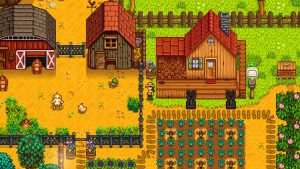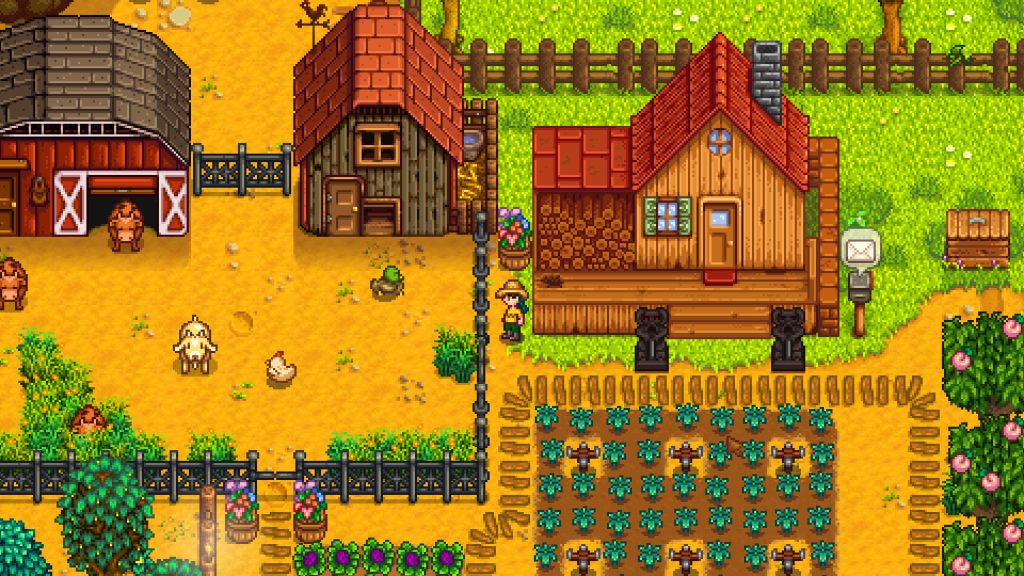
Quick answer: Build a Coop first — it is the cheaper building, chickens are the cheapest animals in the game and they start laying the morning after you buy them. Build a Barn once your income is steady, because barn animals are where the late-game money is: cows turn milk into cheese, and pigs dig up truffles, which are among the strongest raw sales in the game. You eventually want both, since the two buildings house completely separate animals and produce non-overlapping goods.
The real question is not which building is “better” but which one your farm needs at this point. The Coop is an early-game engine; the Barn is a mid-to-late-game multiplier. Below is what each one actually does, and how to sequence them without wasting gold.
What each building can house
The animal pools are strictly separate, and that is the decision that matters most. A Coop holds small animals: chickens, ducks, rabbits and dinosaurs. A Barn holds large animals: cows, goats, sheep, pigs and ostriches. You cannot place a cow in a Coop or a chicken in a Barn, so choosing a building is really choosing a product line.
Both buildings upgrade twice. Each upgrade raises how many animals the building holds and adds a quality-of-life feature. The Big Coop adds an incubator, which lets you hatch eggs into new birds instead of buying them. The Big Barn lets animals become pregnant, so your herd grows on its own. The Deluxe tier of either building adds automatic feeding, which removes the daily hay job entirely as long as you have a silo filled with hay.

Cost and upgrade path
The Coop is the cheapest animal building in the game, and its upgrades stay cheaper than the Barn line at every tier. That price difference compounds: a new player can afford a Coop and two chickens after a good first spring, while a Barn plus a cow costs a multiple of that and leaves nothing for seeds.
Both buildings also consume farm space, and the Barn is the larger footprint. On a small farm that matters — a Barn placed carelessly can cut a field in half — so decide the animal area early and keep the pasture beside it. Exact gold and material costs change between patches, so treat the Carpenter’s menu in your own save as the authority rather than a number quoted in a guide.
Products and what they become
Coop production is built around eggs. Chickens lay eggs daily once friendly, and those eggs go into a mayonnaise machine or straight into cooking. Ducks add duck eggs and the occasional feather, rabbits produce wool and rabbit’s foot, and dinosaurs lay dinosaur eggs. The Coop’s output is steady, cheap and useful, but it is not where fortunes are made.
Barn production has a higher ceiling. Cows give milk daily, which becomes cheese in a cheese press — a strong artisan good with a fast turnaround. Goats give milk every other day. Sheep produce wool for cloth. Pigs are the standout: on days when they can go outside and it is neither raining nor winter, they root up truffles, which sell very well raw and can be pressed into truffle oil. Ostriches add large eggs and mayonnaise material.
The general pattern: Coop goods are support income, Barn goods are your profit line. If you plan to lean on the Artisan profession, the Barn’s cheese and truffle oil scale with it, while eggs mostly become mayonnaise.
Barn vs Coop compared
| Factor | Coop | Barn |
|---|---|---|
| Animals | Chickens, ducks, rabbits, dinosaurs | Cows, goats, sheep, pigs, ostriches |
| Up-front cost | Cheapest animal building | Noticeably more expensive at every tier |
| Footprint | Small | Larger |
| Main products | Eggs, duck eggs, wool, rabbit’s foot, dinosaur eggs | Milk, goat milk, wool, truffles, ostrich eggs |
| Processing | Mayonnaise machine, loom | Cheese press, loom, oil maker |
| Upgrade perks | Incubator (Big), auto-feed (Deluxe) | Pregnancy (Big), auto-feed (Deluxe) |
| Best for | Early cash, bundles, cooking ingredients | Late-game profit, artisan goods |
| Daily effort | Low — eggs collect in one spot | Higher — milking, shearing, truffle picking |
Daily labour and friendship
Both buildings reward the same habit: pet every animal every day and keep them fed. Friendship raises product quality, and high-quality large milk or large eggs are worth substantially more than the basic versions. Coop animals are quicker to service because eggs accumulate in a single collection point, while a Barn morning involves milking each cow and goat, shearing sheep and sweeping the pasture for truffles.
Automatic feeding at the Deluxe tier is the single biggest labour saver in the animal game, and an auto-grabber (available later from Marnie once your Farming level is high enough) removes the collection step as well. If your goal is a large herd, plan for those unlocks rather than assuming you will always have the time.
Which one should you build first?
Build the Coop in your first spring or summer. Buy two or three chickens, keep them fed and petted, and use the eggs for food and early gold. Upgrade to a Big Coop when you can, because the incubator turns spare eggs into free birds and snowballs the building’s value.
Add a Barn in year two, once you have sprinklers doing your watering and a steady crop income. Start with a cow for cheese, then add pigs as your gold allows — pigs need outdoor space and warm weather, so place the Barn beside a fenced pasture rather than in a corner.
Skip the Barn entirely only if you are deliberately running a crops-and-kegs farm and do not want animal chores. Even then, a single Barn for cheese is usually worth the space, because cheese is both a strong seller and excellent food for the mines.
Common questions
Is a Barn or a Coop more profitable? A Barn, in the long run, because cheese and truffles outsell eggs and mayo per animal. Early on, a Coop is more profitable per gold spent because it is so much cheaper to start.
Can I put cows in a Coop? No. Large animals require a Barn and small animals require a Coop; the game will not let you mix them.
Do I need a silo? Yes, or you will be buying hay by hand for the rest of the game. A silo fills with hay automatically when you cut grass on the farm, and it is what makes Deluxe auto-feeding work.
When do pigs produce truffles? On days they can leave the barn and the weather is not rain, and never in winter. Keep the pasture clear so they have room to root.
How many animals should I keep? As many as you can pet and feed daily without resenting the chore. A neglected animal produces lower-quality goods, which quietly cancels the benefit of a bigger herd.
Animals and crops compete for the same morning, so the practical comparison is really about where your time goes. For the crop side of that trade, see the seasonal crop guide, and for turning animal goods into more gold, see the artisan professions comparison.