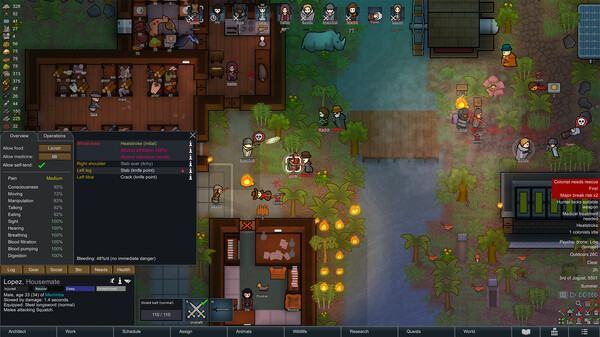
TL;DR: Open the pawn’s Needs tab and read the thoughts affecting mood. Fix food, rest, pain, clothing and recreation problems before buying an expensive comfort project. Improve a shared dining and recreation space when it helps many colonists. Mood moves toward its target over time, so resolving a penalty may not remove break risk instantly. Traits and DLC expectations can change what each pawn needs.
This RimWorld colonist mood guide treats mood as a set of visible causes rather than a mysterious bar. A colony-wide bonus can help, but individual grief, restrictions or traits may require a different response. Start with the pawn whose behavior you need to understand.

On this page
RimWorld Colonist Mood Guide: Read the Target and the Bar
The wiki distinguishes current mood from the mood target. The target reflects the combination of positive and negative thoughts and can change immediately when circumstances change. The current blue bar moves toward that result over time.
That explains why a pawn may remain unhappy briefly after a problem is fixed. Check that the relevant thought has changed and that the target is now healthier. Repeatedly adding unrelated furniture during the delay can waste resources without addressing another cause.
The displayed mental-break thresholds identify risk zones. Traits can alter them, so use the pawn’s actual bar and warnings rather than applying one fixed threshold to everyone. Low mood creates risk; it is not a timer you can ignore until an exact universal minute.
1. Solve Immediate Basic Needs
Check whether the pawn is hungry, exhausted, in pain, poorly clothed or uncomfortable. These are practical problems with direct actions: accessible food, a usable sleeping place, appropriate medical attention or suitable replacement clothing.
A meal sitting in storage may not be available to this pawn because of a policy or allowed-area restriction. A bed can exist while being unassigned or inaccessible. Diagnose the actual path and assignment instead of assuming the colony’s total supplies prove every pawn’s need is covered.
Consider several basic needs together. A worker who spends the day traveling long distances may arrive hungry and exhausted even when the colony has good production. Layout and work assignment can create mood trouble through time lost in transit.
2. Give Meals a Convenient Place to Be Eaten
Provide an accessible table and seating near the places where colonists normally obtain food. A table at the far end of the base can fail to solve the practical eating pattern you observe. Check where the pawn actually eats.
Keep the dining area clean, comfortable and reasonably pleasant. A shared dining and recreation room can improve daily experiences for many pawns, making it a useful early investment. The mood wiki explicitly highlights this shared-space value.
Better meals can add benefits when ingredients and cook capacity support them. Avoid creating a demanding meal policy that the colony cannot sustain. Reliable usable food is a more urgent foundation than an occasional premium meal followed by shortages.
3. Make Rest Compatible with Work
Inspect the pawn’s rest pattern and workload. A colonist repeatedly pulled into lengthy errands or emergencies may not use the sleeping period you expected. A better bed helps only when the pawn can reach and use it.
Reduce unnecessary travel and clarify work coverage. If one pawn handles every major production job, their mood can become a symptom of an overloaded colony plan. Our work priorities guide explains how competing jobs and left-to-right ties shape their day.
Respect relevant traits and current needs. A universal schedule copied from a guide may not fit every pawn. Observe whether the person actually rests, eats and recreates before declaring the arrangement successful.
4. Provide Recreation Time and Variety
Recreation has its own need bar and mood-related thoughts. A recreation object does not guarantee satisfaction if the pawn lacks time, cannot reach it or has become bored with the available type.
Offer different usable recreation types as the colony grows. Repeatedly adding more of the same activity is not identical to adding variety. The wiki describes tolerance and changing expectations, so check the pawn’s recreation information and available options.
Place basic recreation in an accessible shared area. A simple early option can be more useful than advanced equipment the colony cannot power or maintain. Expand the variety when rising expectations or repeated boredom make the need clear.
Some activities depend on skills, other pawns or equipment. Confirm that the intended person can use the source. A beautiful room full of unsuitable options can still leave a particular pawn with little practical recreation.

5. Read Traits and Individual Thoughts
Two colonists can react differently to the same environment. Traits, relationships, beliefs and DLC systems change what feels rewarding or unpleasant. Open each pawn’s actual thought list rather than assuming the colony’s average condition explains everyone.
Passion for assigned work can influence mood. A pawn doing a liked task may benefit, while an arrangement that ignores their strengths can create both production and satisfaction problems. Balance passions with current skill and essential colony responsibilities.
Grief, social events and other longer-lasting penalties may not have an immediate removal action. Improve the manageable daily conditions around them and watch the target. Do not promise that a single decoration will cancel every severe individual penalty.
6. Choose Shared Improvements Before Expensive Individual Projects
Clean shared dining and recreation spaces often benefit many people. Compare that with a lavish bedroom affecting one pawn. Both can be useful, but limited early labor and resources usually deserve an explicit coverage decision.
Remove visible filth and clutter where people eat, recreate or perform sensitive work. Check whether cleaning occurs in practice. An enabled low-priority cleaning box may never receive attention if every available worker has a permanent backlog of higher tasks.
A room’s benefit depends on its actual conditions and use. Do not read “impressive room” as a requirement to spend everything on art immediately. Improve cleanliness, space and useful furniture in a sequence the colony can afford.
7. Respond Early to Break Risk
When a warning appears, inspect the pawn’s thoughts and identify the quickest meaningful fix. Food, rest, pain relief or accessible recreation may improve the target. An unresolved personal event may require maintaining supportive conditions while its effect lasts.
Mental breaks can make a pawn uncontrollable and interrupt work. Prevention protects the wider colony as well as the individual. If a break occurs, respond to the actual behavior and immediate danger rather than assuming all breaks have the same solution.
After the incident, revisit the causes. A repeated failure in the same cook, doctor or traveler suggests a persistent workload, environment or policy issue. Increasing production demands without changing that cause can repeat the cycle.
8. Prepare Travelers Before Formation
Caravan formation can take time while supplies and animals are gathered. Travelers’ needs can deteriorate during that process, so begin with suitable rest and food and keep loading practical.
Our caravan preparation guide includes food, cargo and formation checks. A journey planned only on distance can overlook the mood and condition of the pawns who must make it.
Frequently Asked Questions
Why is mood still low after I fixed a penalty?
The target changes before current mood fully catches up. Check that the thought changed and watch the bar move toward the improved target.
Is one recreation object enough forever?
No universal promise applies. Time, access, tolerance and expectations matter. Inspect the pawn’s need and provide usable variety as required.
Should I build expensive bedrooms first?
Compare the benefit with shared dining and recreation improvements. A project helping several pawns may be the more practical early choice.
Next step: Select one at-risk pawn, read the largest manageable negative thoughts and fix their actual cause. Then confirm the target improves before expanding the colony’s comfort budget.
Sources and Version Notes
- RimWorld Wiki: mood target and management
- RimWorld Wiki: recreation needs and variety
- RimWorld Wiki: mental-break mechanics
- RimWorld Wiki: manual work priorities and job eligibility
- RimWorld Wiki: caravan formation, supplies and travel
Sources read November 11, 2026. RimWorld Wiki is a community reference; traits, DLC and mods alter expectations. No personal colony experiment or measured mood gain is claimed.