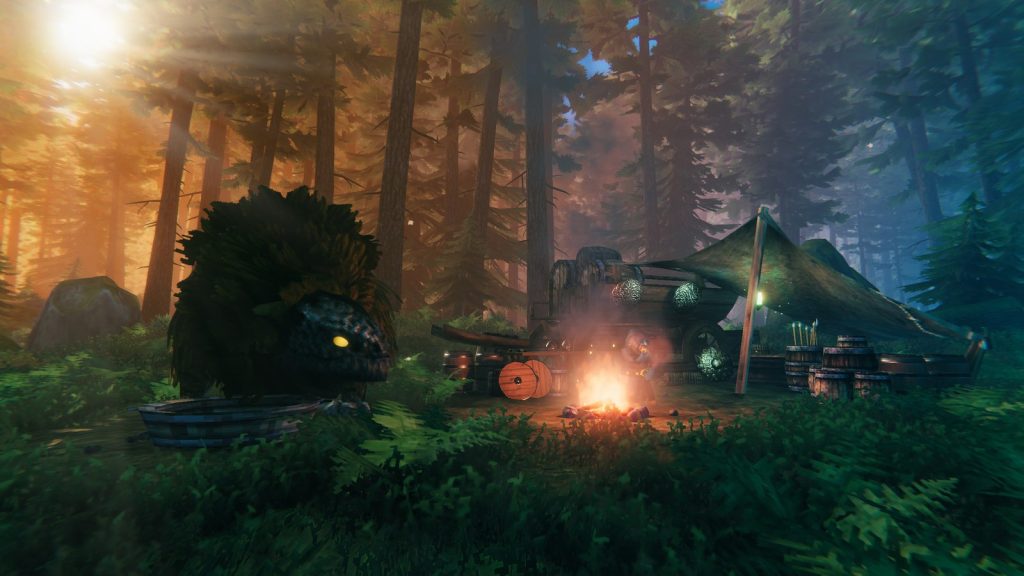
Quick answer: Choose Valheim for a continuing exploration world, Raft for a shared floating home, or Terraria for a two-dimensional mix of building and combat.

On this page
Best co op survival games for small groups: start with your schedule
Valheim is a strong choice for a group that wants to build a home and return to the same exploration world. Pick Raft if keeping everyone around a shared moving base sounds appealing. Grounded offers a recognizable backyard at an unfamiliar scale. Don’t Starve Together suits players who want survival planning to remain demanding, while Terraria works well when digging, equipment upgrades, and boss encounters are as important as construction.
This shortlist uses official game descriptions and platform listings. It compares the kind of shared goal, everyday survival pressure, building focus, combat emphasis, and how much coordination a continuing save demands. These are recommendations by fit, not measured performance rankings or firsthand playtest results. None of these games should be purchased on the assumption that every console, mobile edition, and PC storefront can join the same server. Decide on the exact version first.
| Game | Group or focus | Play arrangement | Decision factor |
|---|---|---|---|
| Valheim | Exploration and building | Persistent world | Boss-led progression |
| Raft | Floating home | Shared voyage | Food, water, gathering |
| Grounded | Backyard adventure | Miniature-scale survival | Insect encounters |
| Don’t Starve Together | Seasonal survival | Shared wilderness | Careful preparation |
| Terraria | 2D exploration | World plus characters | Combat and equipment |
Valheim: build toward a shared expedition
Valheim’s official description supports one to ten players in a procedurally generated world. A small group can divide building, gathering, cooking, and exploration while still meeting for larger expeditions. Its food system grants health and stamina benefits rather than simply making hunger a countdown to death. That offers a useful rhythm: prepare equipment and meals at home, explore together, and bring discoveries back to improve the settlement.
The drawback is a continuing progression commitment. If one player advances far ahead, the next group meeting may no longer feel like a shared discovery. Establish when boss attempts and unfamiliar biomes are group events. Also choose how the world will be available when the original host is absent; a dedicated server introduces its own configuration and costs. Valheim remains a game with dangers, equipment recovery, and preparation rather than a purely decorative building sandbox. Groups who want uninterrupted relaxed construction should investigate the available world settings before starting.
Raft: keep the group around one moving home
Raft centers the survival loop on gathering ocean debris, expanding a raft, and exploring islands. The shared home gives a small group an obvious meeting point and visible common project. Choose it when you enjoy improving an initially limited space into a functional vessel. A practical first-session division is to have people watch different immediate needs, while still explaining what the raft needs next so nobody spends the evening doing a job they dislike.
Food, water, and hostile ocean life are part of the premise. That pressure is a drawback for a group that only wants to decorate a boat. The floating base can also make disagreements about layout or travel more noticeable because everyone shares its facilities. Agree on storage locations and announce planned departures from an island. The source verifies online co-op for the Steam PC edition; it does not establish every console’s compatibility with that edition. If friends own different platforms, verify the specific release and connection method before choosing Raft.
Grounded: familiar surroundings, unfamiliar threats
Grounded places players in a backyard after shrinking them to roughly an insect’s scale. Its official storefront confirms the survival setting and online cooperation. Choose it for a group attracted to exploring grass, garden objects, and insects as major landmarks and threats. A shared interest in the setting can make routine gathering feel purposeful: you are learning a common landscape rather than merely checking tasks off a resource list.
Large insects are also a reason some players will dislike it. Ask about comfort with spiders and insect encounters before treating the colorful surroundings as evidence that it is a gentle game. Combat and preparation remain part of survival. The currently retrieved store description includes promotional wording for the Fully Yoked update; that wording alone does not establish a current patch number or the status of every advertised feature. Use the in-game version and official support when a particular feature matters. Keep shared-world or platform-specific claims separate from the simple fact that the Steam edition lists online co-op.

Don’t Starve Together: make preparation the main project
Don’t Starve Together is the standalone multiplayer version of the wilderness survival concept. Its official description emphasizes exploration, farming, building, and cooperating through a changing world. It is a good fit for a small group that wants discussing supplies and priorities to be an important part of the game. Begin with a shared base plan, reliable necessities, and a clear agreement about whether the group wants forgiving world options or a more demanding survival experience.
The downside is the learning burden. A team that treats every unknown item or creature as harmless can lose resources and momentum, and a player familiar with the game can end up directing everyone else. Let newcomers learn one responsibility at a time rather than handing them a complex build order. Don’t Starve and Don’t Starve Together are different purchases and modes, so check the name carefully. Cosmetic purchases or edition bundles should not be confused with the basic ability to enter the same multiplayer world.
Terraria: choose progress through equipment and exploration
Terraria offers digging, building, crafting, and combat in a two-dimensional world. Its official PC listing includes online co-op and Windows, macOS, and Linux versions. It suits groups that want multiple useful activities in the same session: one person can improve housing while another searches underground and others prepare equipment. The visual perspective is also an alternative for someone who dislikes first-person survival games.
That freedom creates a coordination drawback. A player can trigger progression or change an important area while friends are working elsewhere. Decide which bosses and major world changes require everyone to be present. Characters and worlds are separate concepts, so agree on whether outside equipment belongs in your new group save. A seasoned character carrying advanced items can bypass the discovery your group intended to share. The PC platform listing does not prove compatibility with console or mobile Terraria; match editions and versions rather than relying on the common game name.
Choose a save arrangement your group can maintain
Discuss three questions before the first evening: who owns or hosts the world, when major progression happens, and whether people can gather independently between group sessions. A persistent group becomes frustrating if only one person can open its save and that person is often absent. Read the actual hosting options for your chosen game instead of assuming a dedicated server, cloud save, or shared world is automatically available.
Plan a modest opening objective, such as a usable base and a safe route to one nearby resource. This makes success visible without turning the first session into a speedrun. Keep valuable storage organized and let every participant choose an activity. If your group meets only occasionally, a game that preserves an understandable shared goal may fit better than one whose survival systems demand that everyone remember several unfinished emergencies.
Questions about small-group survival
Should we choose the game with the highest player limit?
Only if you need that limit. A group of three or four usually benefits more from suitable difficulty, understandable progress, and reliable hosting. Valheim’s larger capacity is useful evidence of support, but it does not mean it is the best fit for every small team.
Can one experienced player carry the group?
They can help, but decide what kind of help everyone wants. Explaining equipment and safe preparation preserves participation. Importing advanced gear or completing discoveries alone may remove the reason newcomers joined. Agree on outside resources and independent progression at the beginning.
Are these all relaxing building games?
They all include more than decoration. Survival, combat, resource gathering, or progression can interrupt construction. Look at world options and the game’s underlying loop if your primary goal is a quiet shared building project, and choose with the least experienced participant in mind.
Sources and method
Official sources checked November 11, 2026. Recommendations compare documented play arrangements and practical fit. Exact current prices, measured hardware performance, and personal playtests are not claimed.