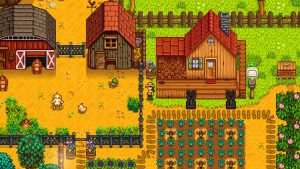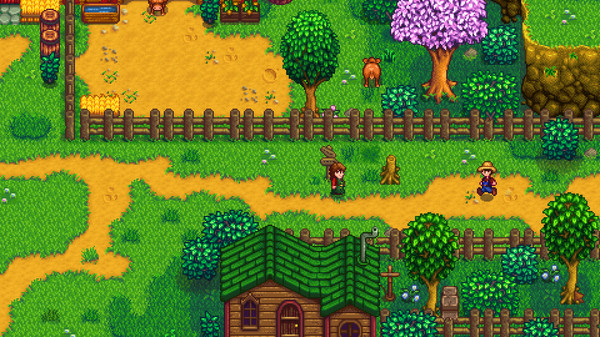
TL;DR: Choose Standard for a flexible first farm, Forest if you enjoy foraging and renewable hardwood, or Meadowlands if an animal-focused start appeals to you. Four Corners is convenient for dividing jobs in co-op. Beach changes crop watering because sprinklers do not work on its sandy soil, so choose it for that tradeoff rather than its appearance alone.
This Stardew Valley farm types comparison covers the eight unmodded map choices through version 1.6, including Meadowlands. The best map is the one whose daily work you want to do. A farm’s special resource does not automatically make it the most profitable map for every schedule, player, or skill level.
| Farm | Best fit | Main tradeoff |
|---|---|---|
| Standard | Flexible crop and building layouts | Few special on-farm resources |
| Riverland | Fishing-focused daily routine | Water divides usable land |
| Forest | Foraging and hardwood access | Less open planting space |
| Hill-top | Small on-farm mining area | Cliffs and river complicate layout |
| Wilderness | Combat activity at home | Nighttime monsters can interrupt chores |
| Four Corners | Organized zones for solo or co-op | Barriers shape movement and layout |
| Beach | Foraging, fishing and a different crop routine | Sprinklers do not work on sand |
| Meadowlands | Animal-focused start | Less crop-focused than Standard |

On this page
Standard: Choose Space and a Straightforward Layout
Standard has the largest usable planting-focused area among these map layouts. Its broad open space makes it easy to plan crop blocks, paths, barns, coops, and later equipment without working around many islands or cliffs. It is a sensible default when you do not yet know which part of the game will become your favourite.
The tradeoff is that the map offers fewer special on-farm gathering advantages. You still travel for many resources and fishing needs. That is not a major penalty for a first run because travel and exploration are part of the game, and the open layout gives you room to change your plans as you learn.
Forest: Choose Foraging and Renewable Hardwood
Forest adds seasonal forage and renewable large stumps in its western areas. The reviewed map reference describes eight stumps that can return when their positions are not blocked. Upgrade the appropriate tool before planning to harvest them, and leave their respawn space clear if hardwood is part of your routine.
Grass, bushes, ponds, and the special resource areas reduce the broad planting space compared with Standard. Choose Forest because you like gathering resources close to home, not because you assume its whole surface is available for a giant rectangular crop plan. Buildings and paths can still use suitable non-tillable space.
Meadowlands: Choose an Animal-Focused Opening
Meadowlands was added in version 1.6. ConcernedApe’s official changelog confirms that it starts with a coop and two chickens and includes chewy blue grass that animals enjoy. That gives you an immediate animal-care routine rather than requiring the normal first coop purchase before owning chickens.
The starter resources support that direction: the map reference describes hay in place of the ordinary starting parsnip seeds. You can still grow crops, but the layout is not built around maximizing open crop area. Choose it when feeding, caring for animals, and designing grazing space sound enjoyable rather than treating the initial coop as a guaranteed faster route to every goal.
If the option is missing, check that your game version includes 1.6. The map is a new-save choice, so updating an existing Standard farm does not automatically convert its terrain into Meadowlands.
Riverland: Choose Fishing and Expect Smaller Land Sections
Riverland divides much of the map with water and islands. Its farm fishing can produce useful fish rather than behaving like Standard’s limited pond. The 1.6 map reference also records a starting Fish Smoker, giving a fishing-focused run an extra tool for its opening plan.
Water reduces planting space and creates narrower routes. Before committing to a large crop layout, consider how you will move between the farmhouse, buildings, and separate fields each day. Choose Riverland because you expect to fish regularly, not because every farm task becomes easier on an island.
Hill-top: Choose a Small Mining Area at Home
Hill-top includes an on-farm mining area where stones, ore nodes, and geode nodes can appear. The available material depends on mining progression. This can supplement gathering between other chores, but it does not replace the mines and other major material sources.
Cliffs and a winding river make building and crop layouts less open than Standard. Early access to part of the quarry can also be blocked by obstacles requiring tool upgrades. If a clean, easily expanded rectangle is your main priority, the special mining area may not justify that layout cost.

Four Corners: Choose Clear Zones for Shared Jobs
Four Corners divides the farm into distinct areas with features representing other map styles, including a small hardwood feature and a quarry area. The division makes it convenient to assign zones to crops, animals, trees, processing, or different players without drawing imaginary boundaries across one large field.
It is usable in single player too. The name describes the map layout, not a requirement that four people join. PC’s 1.6 multiplayer player limit and the number of available cabins are separate from the four quadrants. Read the multiplayer cabin setup guide for the actual host and guest requirements.
The barriers affect routes and available planting space. Plan entrances and shared paths so the layout’s organization does not become a daily detour around machines, fences, or poorly placed buildings.
Beach: Choose a Different Watering and Gathering Routine
Beach offers extensive sandy terrain, foraging, fishing, and supply crates that can wash ashore. The important farming restriction is that sprinklers do not work on sand. A smaller ordinary-soil patch allows sprinklers, but it does not make the whole beach behave like a Standard crop grid.
Manual watering, animals, processing, and the greenhouse can change how you organize the run. Those are practical ways to work with the map rather than assumptions that you can eventually place normal sprinklers everywhere. Choose Beach when the different daily routine is part of the appeal.
Do not reject it because all farming is impossible, either. Crops can grow on suitable sandy ground, but watering and automation have restrictions. The decision is about the kind and scale of crop work you want to maintain.
Wilderness: Choose Nighttime Combat With the Farm Layout
Wilderness spawns monsters at night under its normal settings. That adds combat activity to the space where you do chores. If you want to finish late harvesting and watering without interruptions, another map is a more straightforward choice.
Monster spawning can also be enabled through advanced settings on other farms, so Wilderness is not the only possible way to see farm monsters. Its particular layout and monster behaviour are the reasons to choose it. Do not select it solely because you assume combat is permanently unavailable on every other map.
Choose the Daily Routine Before Starting the Save
Farm type is selected when creating the save and cannot be changed through the normal farm-management interface afterward. Buildings can move, and layouts can evolve, but those changes do not turn islands into Standard terrain or remove Beach’s sandy-soil restriction.
If you are undecided, create a separate short test save and walk the map. Check the routes you will use every morning and the spaces you want for animals and crops. Keep the farm whose everyday work suits you instead of selecting a map only from a screenshot of a fully developed late-game layout.
Frequently Asked Questions
Is Four Corners required for multiplayer?
No. Multiplayer can use other farm maps when the save has the required guest cabins and the platform supports the intended session. Four Corners simply makes dividing areas convenient.
Can I switch to Meadowlands in an existing save?
The normal interface does not replace an existing farm’s map type. Meadowlands is a new-save map choice introduced with 1.6.
Are sprinklers completely useless on Beach?
They do not work on sand, but the map includes a smaller normal-soil area where they can work. Plan crop scale and routes around that distinction.
Next step: Choose one priority: flexible crops, animals, fishing, gathering, combat, or clear shared zones. Select the map that supports that routine and keep its terrain tradeoffs in the first season’s plan.
Sources and Version Notes
- Stardew Valley Chinese Wiki: Farm Maps
- ConcernedApe: Stardew Valley 1.6 Full Changelog
- Stardew Valley Chinese Wiki: Multiplayer
Sources read November 11, 2026. Official 1.6 changelog confirms Meadowlands, its starting coop and chickens. The Chinese community wiki provides the eight-map mechanics; facts are translated into English here. Exact tile counts are omitted because source annotations and movable buildings affect those comparisons.