TL;DR: Start a Signs-focused character with Quen for protection, Igni for suitable damage opportunities, and Yrden for control. Develop active Sign skills, use blue mutagens in compatible groups, and wear equipment that supports intensity and stamina recovery. Read your installed version’s skill tree before following a fixed point-by-point build.
A practical Witcher 3 Signs build creates a repeatable combat cycle: protect yourself, control space, cast when the target is vulnerable, then use sword attacks and movement while preparing the next cast. Griffin equipment is a useful long-term match, but the early build works with suitable equipment you can actually obtain and equip.
This is a progression plan rather than a claim about the strongest possible damage number. The enemies you fight, your version, and your ability to keep good positioning matter. A casting plan that leaves you exposed with empty stamina needs adjustment even when the inventory lists high Sign intensity.

On this page
Witcher 3 Signs Build: Match Your Game Version
Check the version before choosing skills. Classic 1.32, the 4.x next-generation update, and the 2026 Remastered 5.x system have different balance and progression assumptions. A screenshot showing an old skill layout is not a universal leveling order.
| Version family | What to check | Practical response |
|---|---|---|
| Classic 1.32 | Classic ranks, effects, and unlock layout | Use a classic-specific numerical build |
| Next-generation 4.x | Rebalanced effects and available quick casting | Use a 4.x guide and the local tooltips |
| Remastered 5.x | Prerequisite nodes and three ranks per skill | Follow the actual connected skill tree |
The official Remastered update notes say existing skill points are reset when the new system is applied. If you returned to an old save after that update, rebuild the active setup before testing combat. An empty skill arrangement cannot demonstrate how the old build now performs.
2. Establish Protection and One Damage Option
Use Quen to provide a defensive margin while you learn the enemy’s attacks. Reapply it when appropriate and keep moving; the shield supports a careful fight rather than removing the need to dodge.
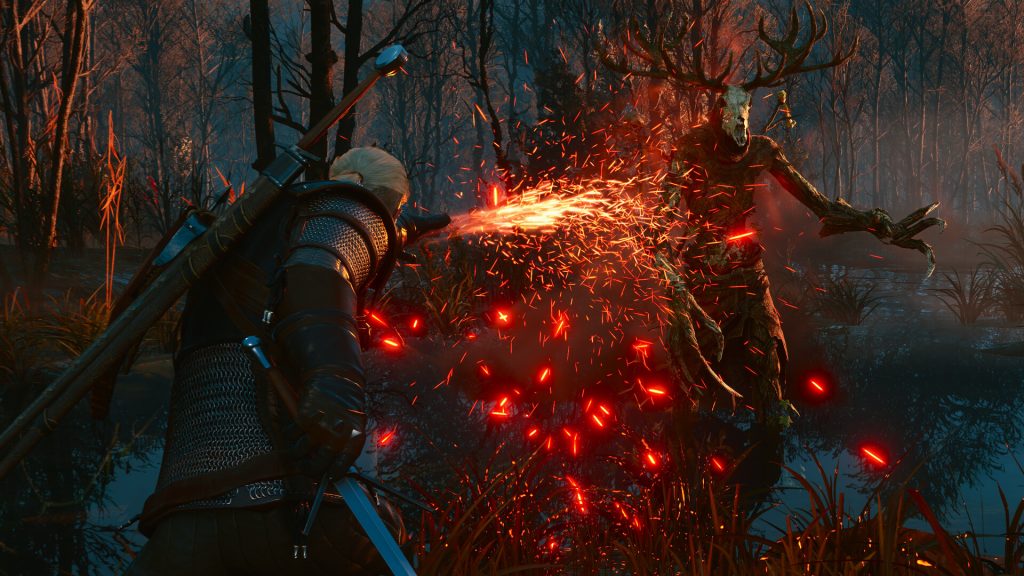
Igni is a useful early damage option against suitable targets. Cast when you have a clear opening, then move or attack with your sword while waiting for another opportunity. Fire-resistant enemies require a different plan, so read the bestiary instead of spending every cast on the same resistance.
Develop the relevant available skills without assuming that every named upgrade is unlocked at the same point in all versions. Exploding Shield, Igni improvements, and their prerequisites should be checked in your own menu. A purchased skill also needs to be in the active setup where the game requires it.
The Witcher 3 beginner guide covers the preparation and sword-use habits that support this stage. Keeping a working melee option is useful even when Signs are the focus.
3. Add Yrden for a More Controlled Fight
Yrden gives the build a space to control rather than only a damage button to press. Place it where you can remain mobile and keep the target involved in the fight. Dropping it far behind you and immediately leaving the area wastes its practical value.
Skills such as Sustained Glyphs and Magic Trap develop the Yrden part of the setup where available. Read what the current rank changes, then test one improvement before investing the next point. This lets you identify whether duration, an alternate effect, or another prerequisite is the actual bottleneck.
In the current Remastered community build reference, later Yrden and Igni synergies become a major part of the casting plan. That version-specific recommendation should not be copied as a classic skill tree. The useful shared habit is to fight within the area you prepared and choose attacks that benefit from the control.
Keep a route around the target and out of danger. A control zone helps only when you can use it without trapping yourself against scenery or several attacking enemies.
4. Support the Active Skills with Blue Mutagens
Blue mutagens support Sign intensity, and compatible active Sign skills improve the relevant group’s bonus. Check the slot arrangement rather than merely placing a blue item somewhere in the character screen.
Use available slots consistently as progression opens them. A useful early setup can benefit from several active Sign skills rather than investing everything in one skill and leaving other usable slots empty. The exact unlock and point order still belongs to the installed version.
Combine smaller blue mutagens through the available crafting process when you have the required supply. Preserve the ones currently supporting the build until you can replace them. A larger mutagen in storage does not improve the active arrangement until you put it in the appropriate place.
Inspect the displayed intensity after changing the group. This confirms that the equipment and active skills are arranged as intended without relying on an old screenshot’s percentage.

5. Choose Gear around Stamina and Intensity
Griffin gear is a natural equipment direction for a Signs build. Use the accessible tier that meets your level, diagram, material, and craftsman requirements. Until then, use suitable armor with useful Sign benefits and a stamina profile that supports casting.
Heavy armor can slow the recovery that your casting rhythm depends on. Compare actual performance and the listed effects before replacing a working lighter or medium setup with armor chosen only for its defense number.
School-technique skills and armor type should agree. Read the perk’s conditions and count the qualifying pieces rather than assuming any outfit receives the same benefit. This is especially relevant when mixing equipment found during early quests.
The Witcher gear upgrade guide explains the Griffin upgrade chain. Grandmaster bonuses and mutation-based late-game combinations belong to later progression and expansion access, so they are not prerequisites for starting a Signs character.
6. Test a Complete Combat Cycle
Begin with protection, create useful space with Yrden when appropriate, and cast Igni at a suitable opening. Use sword attacks and dodges between casts. If every fight leaves you waiting helplessly for stamina, shorten the offensive sequence or improve the supporting setup.
Practice on a manageable enemy group and change one part at a time. Replacing armor, several skills, mutagens, and controls together makes it hard to tell which change helped or caused trouble.
Quick Sign Casting, available in the newer version families, can reduce menu interruptions when you prefer its controls. Learn the inputs before a dangerous fight. A faster input method does not change enemy resistance or make an unavailable upgrade active.
For resistant targets, switch the Sign choice and use the bestiary’s other tools. A Signs build still benefits from preparation, suitable oils, bombs, and a maintained weapon under the normal durability rules.
Frequently Asked Questions
Do I need Grandmaster Griffin gear to begin?
No. Start with suitable early gear and upgrade as the character progresses. Grandmaster crafting is an expansion-era goal, not an opening requirement.
Why does my old skill order no longer work?
The 2026 Remastered update changed skills into a prerequisite-based tree. Classic and 4.x numerical orders need version-specific interpretation.
Should I stop using swords entirely?
A sword gives you an option between casts and against unsuitable targets. Keep it useful while the Sign setup develops.
Next step: Check the version, activate a small Quen-and-Igni setup, and test it before adding the Yrden and equipment layers.
Sources and Build Scope
- WitcherHour: current Witcher 3 builds supports active skills, blue mutagens, equipment, and the current Signs progression context.
- WitcherHour: next-generation update notes records the earlier quick-casting and balance changes.
- Official Steam announcement: Remastered changes documents the 2026 prerequisite tree and rank system. Sources were read November 11, 2026; no damage benchmark or universally optimal build is claimed.