TL;DR: Put important vendors in a preferred biome, give them compatible nearby neighbors, and keep settlements small to improve prices. Read each NPC’s Happiness dialogue and check the shop after moving them. In Desktop 1.4.5, pylons no longer require a happiness threshold to be sold, although a working biome pylon still needs nearby housed NPCs.
This Terraria NPC happiness guide separates two jobs: making expensive services cheaper and building a working transport network. Happiness still affects prices in modern Terraria. However, a guide that says every pylon purchase needs a particular discount can be giving you rules from before Desktop 1.4.5.

On this page
Terraria NPC happiness guide: check these 5 things
- Confirm the NPC has a valid, assigned home.
- Place the home in a biome that NPC prefers.
- Choose a nearby neighbor the vendor likes or loves.
- Move unrelated or disliked neighbors out of the close cluster.
- Read Happiness dialogue, then compare the same shop item or service.
Do these checks for the vendor whose prices matter most. Rebuilding the whole world for perfect discounts is optional. A convenient town with slightly higher prices can still be a sensible choice for services you use only occasionally.
Happiness changes prices; it does not replace housing
NPCs have preferences for biomes and other NPCs. Favorable conditions lower purchase prices and improve the amount you receive when selling items. Unfavorable conditions do the opposite. The Official Wiki NPC reference describes normal purchasing limits of 75% to 150% of the base price.
Those limits do not mean one good neighbor automatically gives the maximum discount. Several modifiers combine, and the result is capped. Use the same item to compare shops before and after a move; comparing two different items tells you nothing useful about the modifier.
Valid housing remains the foundation. Use the housing query to check the room, then assign the intended NPC. In modern 1.4.5, an NPC can temporarily arrive homeless, but that is not a finished town setup. The NPC reference records special arrival and departure behavior for those homeless visitors.
Use preferred biomes as the first layout decision
Biome preference is an easy way to improve a vendor without constructing a dense apartment block. The NPC’s Happiness dialogue tells you which current conditions matter, while modern Bestiary portraits can help identify preferred biomes. For a full table, consult the official preference reference.
| Vendor to prioritize | Useful starting location | Reason to consider it |
|---|---|---|
| Merchant | Forest | A preferred biome and easy early access to a common shop. |
| Arms Dealer | Desert | A preferred biome for a vendor you may visit often for ammunition. |
| Dryad | Jungle | A preferred home biome when you establish a Jungle settlement. |
| Goblin Tinkerer | Underground or Cavern | Price improvements matter when you spend heavily on reforging. |
| Mechanic | Snow | A preferred biome for a wiring-focused town. |
This is a starting layout rather than a universal maximum-discount chart. The preference subpage notes that some relationships are based on older source-code references. Verify the resulting dialogue and shop in your installed release before treating a copied chart as exact.
Keep desired neighbors close and the settlement small
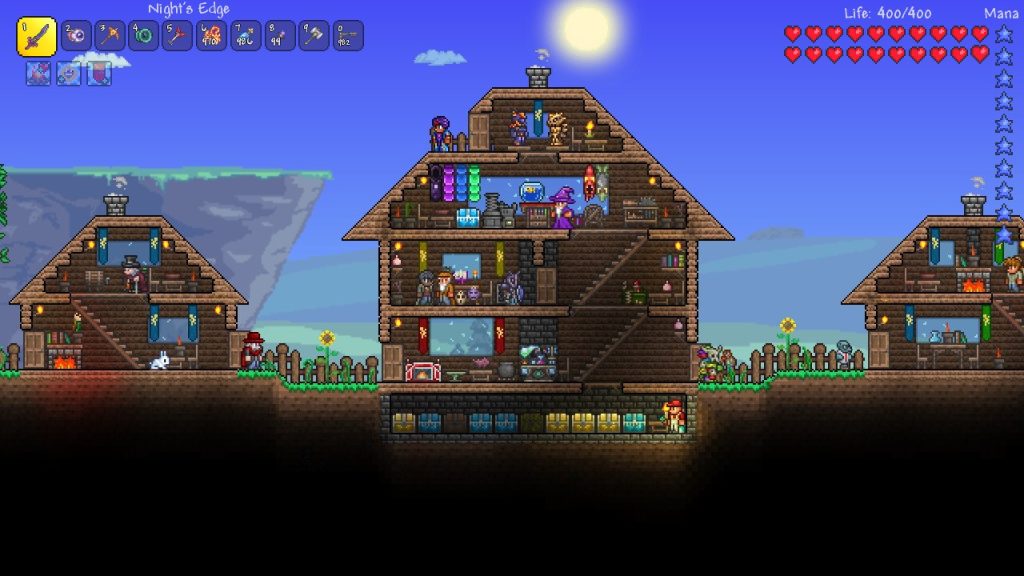
The modern NPC reference uses a close-neighbor radius of 25 tiles for relationship effects. Its solitude bonus applies when there are no more than two other NPCs within 25 tiles and no more than three others in the surrounding range out to 120 tiles. A compact pair or small cluster is easier to manage than one building full of every vendor.
Measure the layout around assigned homes rather than relying only on where an NPC happens to be walking during the day. A neighbor across a large settlement can look nearby on the screen while being outside the close relationship range. Moving a housing banner also does not always move the NPC instantly.
A commonly useful pair to test is Arms Dealer and Nurse. The Arms Dealer prefers the Desert, while the Nurse has a different biome preference, so the same location does not optimize both equally. For costly Goblin Tinkerer visits, placing the Mechanic near him is another practical test, but check both NPCs individually.
Relationships are directional. One NPC liking a neighbor does not prove the neighbor feels the same way. Avoid using a cheerful response from one resident as confirmation that the entire town has an ideal arrangement.

Desktop 1.4.5 changed what you need to buy pylons
The Official Wiki pylon history states that Desktop 1.4.5.0 removed the minimum happiness required for NPCs to sell pylons. Do not keep moving a vendor around solely to reach the old discount threshold if your release uses those rules.
You still need an eligible shop vendor, another nearby NPC, and the relevant biome conditions. The pylon page states that vendor biome stock follows the player’s biome position. In a mixed biome, where you stand while opening the shop can therefore affect which pylon appears.
Desktop 1.4.5.4 also removed pylons from the Tavernkeep’s shop. If you are following an older arrangement that relies on buying from him, use another eligible vendor instead. A guide written for an older release may be correct for that release but still waste time in yours.
A working pylon network has separate requirements
For ordinary biome pylons, both the starting pylon and destination need at least two housed NPCs in the relevant nearby area, and each pylon must match its biome. The Wiki’s current description uses a 169 by 124 tile rectangle centered on each pylon for the housing check. Town pets can count under the stated rules.
Keep the homes near the pylon, enable the minimap, and stand close enough to the starting pylon to use the network. You can place only one of each pylon type in a world. Maximum happiness is not required to keep an already placed pylon working.
Desktop 1.4.5 also removed the older restriction that blocked pylon use during bosses and certain hostile events. If your installed release predates that change, those restrictions can still explain a failure. Check the exact error message rather than treating every failed teleport as a happiness problem.
Fix a town using the symptom you can see
If a vendor is expensive, read Happiness dialogue and inspect biome, neighbors, crowding, and home status. If a pylon is absent from the shop, inspect vendor eligibility and the player’s biome first on modern releases. If a purchased pylon does not work, query housing at both ends and check the pylon’s own biome.
Corruption or Crimson near a town can invalidate housing and disrupt services. Early Hardmode preparation should include protecting settlements and leaving routes for later cleanup. Hallow has different housing effects, so do not assume every spreading biome creates the same town problem.
FAQ
Do all NPCs need maximum happiness?
No. Prioritize vendors with expensive or frequent transactions, especially reforging and repeat purchases. Convenience and easy access can be more valuable than squeezing every town down to the price cap.
Why does a neighbor not improve happiness?
Check that the relationship helps that specific NPC, confirm the homes are within the modern close range, and allow the residents to reach their assigned homes. Other penalties can offset a helpful neighbor.
Can I put every NPC in one tower?
You can build valid rooms in a tower, but nearby crowds can reduce happiness. Separate small settlements are a more manageable starting point for price optimization and a wider transport network.
Does a pylon stop working when the shop owner becomes unhappy?
Its operation depends on housing, proximity, biome, and the rules of your release. Happiness is not the continuing activation requirement. Use the pylon error message to identify the missing condition.
Start by improving one high-cost vendor, then create two functioning pylon towns. Follow the beginner progression guide for world milestones and the Terraria hub for related systems.
Sources and version notes
Read on 10 November 2026: NPCs, NPC preferences, and Pylons on the Official Wiki. The 1.4.5 buying and event changes are explicitly version-specific; the preference table warns that some code references are older.