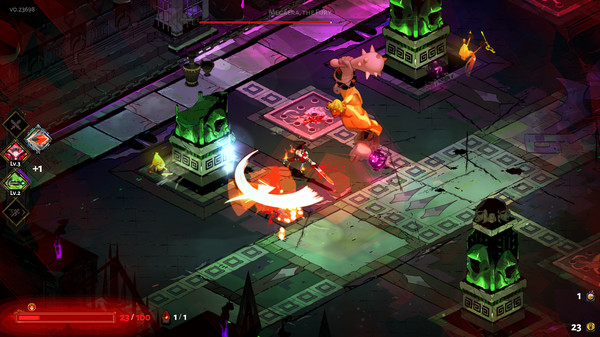
Quick answer: Learn one weapon, buy an extra dash and early survival upgrades at the Mirror, build around a useful attack or special, and treat each defeat as progress.

On this page
Hades beginner guide: your first goal is a repeatable run
Start by learning one weapon’s attack, special, cast, and dash. Use the Mirror of Night to buy practical survival improvements, especially Greater Reflex and the first Death Defiance when their costs are within reach. During an escape, choose upgrades that support the move you are using rather than collecting unrelated effects. Return to the House after defeat, speak with its residents, spend permanent resources, and begin the next attempt with one clear lesson.
This guide concerns the original Hades with Zagreus, the Mirror of Night, and Infernal Arms. Hades II uses different progression and weapon systems. It draws on Supergiant’s official FAQ and named community mechanics references; the practical order is editorial advice, not a claim of a personally measured fastest route. You do not need to escape on an early attempt to make useful progress. Knowledge, resources, and conversations are part of the game’s repeated-run structure.
| System | What carries over | Beginner action |
|---|---|---|
| Mirror of Night | Purchased talents | Spend Darkness on practical survival |
| Infernal Arms | Unlocked weapons and aspects | Try the base move set first |
| Boons and Hammers | Current escape attempt | Support the moves you actually use |
| Artifact currencies | Collected permanent resources | Spend by the correct system |
| Keepsakes | Unlocked keepsake collection | Choose a useful starting effect |
1. Learn movement before trying to maximize damage
Practice dashing in a chosen direction and then using a dash-strike against a familiar target. Watch where you end up, because avoiding one attack is less helpful if you land beside another enemy or on a hazard. In an unfamiliar encounter, stop attacking briefly and observe the enemy’s movement and attack preparation. A safe opening with fewer hits is more repeatable than holding attack while hoping the enemy falls first.
Greater Reflex is an early Mirror talent that adds one extra dash. The reference lists its cost as 50 Darkness, and that additional movement option is useful while learning position and recovery. It does not mean every dash can be used carelessly. Practice moving across an enemy’s attack path and then recovering in open space. Use your platform’s actual input settings rather than copying a keyboard shortcut from a controller-focused guide. Comfortable bindings help you use the same defensive action consistently.
2. Understand the weapon before buying a new one
The Stygian Blade is the starting weapon. Other Infernal Arms are unlocked with Chthonic Keys, and their basic move sets differ. The bow charges a ranged shot, the shield can block from the front while charging Bull Rush, and the spear provides longer attacks and a thrown special. Those differences can matter more than an early boon choice. Try a newly unlocked weapon in the courtyard and make sure you can distinguish attack from special before entering a run.
Do not assume the shield protects every side of your position or that range removes the need to dodge. Each tool has its own limitations. A weapon that feels comfortable often teaches you more than one chosen because an advanced build guide calls it powerful. The fists and rail have additional unlock prerequisites, so an absent weapon is not necessarily a broken save. Inspect the courtyard’s actual key requirements and use the weapon you can currently access while learning how the arsenal expands.
3. Separate permanent resources from this run’s rewards
Darkness and keys support progression outside the escape attempt. Boons, run money, and Hammer effects chiefly support the current attempt. Look at the room reward symbol before choosing a door and decide whether you are developing the save or trying to strengthen this particular run. Both goals can be useful, but they lead to different choices. You may prefer a permanent resource on a learning attempt and immediate survival or damage on a promising attempt.
Do not treat a resource run as wasted because it ends before the final area. It can pay for a useful Mirror talent or a new weapon, while teaching a boss pattern. Conversely, choosing permanent resources at every opportunity can leave the current build short of tools. Review the run’s immediate needs: reliable damage, enough health, and a way to handle the enemies you are facing. A simple goal for the attempt makes those choices easier to explain and repeat.
4. Spend early Darkness on improvements you will use
At the Mirror, the first Death Defiance costs 30 Darkness and gives one revival when your life is depleted, restoring half of your maximum health. Later ranks are much more expensive. Chthonic Vitality provides small healing when you leave chambers, and Greater Reflex supplies the extra dash. These early talents offer understandable effects while you learn. You can then expand into health, cast, and damage talents as the relevant rows become available.
Keys unlock additional Mirror rows, while Darkness buys ranks within those rows. Our Mirror of Night upgrade guide explains the talent choices and resource requirements before you rebuild the configuration. Spending one currency does not replace the other requirement. The Mirror’s red and green talents are alternatives, not a set of simultaneous bonuses. Green options become available after progress and a conversation with Nyx. Read which option is active before starting a run. If you later refund Darkness, the reference describes a one-key cost and a full refund of Mirror investment, so rebuild the intended configuration before leaving the courtyard.
5. Build around a main damage action
Choose whether your weapon is mainly using attack, special, or cast, then judge boons by how well they support that action. An improvement to a rarely used move may be less valuable than a modest improvement to the action you land reliably. Read the actual effect and think about its trigger. A conditional bonus needs you to perform the condition; it is not equivalent to unconditional damage merely because the number looks larger.
Avoid planning your entire early run around a rare Duo boon you have not yet qualified for. Start with a functioning ordinary build and let later choices improve it. If you want to pursue a named combination, check the specific Duo boon prerequisites instead of assuming any boon from each of two gods is sufficient. Your weapon, Mirror setup, and current boons work together. A coherent basic loop lets you survive long enough to learn which more elaborate combinations you actually enjoy.

6. Treat Daedalus Hammers as move-set decisions
Infernal Arms can receive Daedalus Hammer upgrades during an escape. A Hammer can change how a weapon behaves, so read its terms before choosing. Consider whether the effect works with the action you already use and whether it changes a movement or timing habit you depend on. Do not choose a dramatic-sounding upgrade solely because it appears rare or exciting. Your immediate objective is a usable weapon, not a collection of impressive descriptions.
Hammers are separate from permanent Titan Blood aspect upgrades. The weapon aspects guide explains that permanent system separately from the Hammer choices in a single escape. A Hammer found during one run does not buy or raise the weapon’s saved aspect level. Likewise, an aspect’s benefit does not mean every Hammer effect is available to it. Check the offered options and your actual form rather than following a build sequence that expects another aspect. If a change feels awkward, adapt your fighting rhythm for that attempt and remember the interaction when selecting the weapon next time.
7. Keep health and revival capacity meaningful
Health is useful because it gives you time to learn a fight, but recovery and avoiding hits are different resources. A revival can rescue a mistake without making an unsafe strategy sustainable. When a fight repeatedly consumes all your revivals, identify the attack you are failing to avoid. Practice one safer response rather than assuming a larger damage number is the only solution. Going slowly through a familiar room can preserve resources for the area you are still learning.
The official FAQ says God Mode makes Zagreus more resilient to damage and increases that resilience after deaths. It is an available assistance option for players who want the story and repeated-run structure with more forgiving damage. It does not replace learning your controls or choosing a functional build. Hell Mode is a separate harder arrangement with the Pact active from the beginning; a new player seeking flexibility should understand that difference before choosing the save’s mode.
8. Use the House as part of progression
After an attempt, check the House’s residents and the systems that have become available. Conversations are part of Hades’ continuing story and can matter for later unlocks. Keep the goal modest: learn one new interaction, spend the resource you were collecting, and review why the last run ended. Returning immediately to combat without checking the House can make useful progression appear less clear than it really is.
Nectar can unlock keepsakes from suitable recipients, while Titan Blood mainly develops weapon aspects once that system becomes available. These resources have different purposes, so do not treat one as a substitute for another. Choose a keepsake by an effect that helps the upcoming attempt, not solely by liking its character. The fact that a collection has many later entries does not mean you need them all before the first escape. Develop useful options as you encounter them naturally.
9. Review one problem after each defeat
Ask a concrete question about the last attempt: did an enemy’s attack surprise you, did your weapon miss repeatedly, or did you arrive at a boss without enough health? Those problems suggest different changes. Surprising attacks call for observation, missed attacks call for position or a different weapon rhythm, and depleted health can point toward safer routes or survival upgrades. Change one important habit so you can recognize whether the next run improves.
Avoid measuring progress only by the final room reached. A shorter attempt can still teach a reliable response or obtain a resource that improves future runs. Keep advanced build advice in proportion to your current unlocks. A guide written for a fully developed Mirror and a high-level aspect may be accurate while still being unsuitable for your fresh save. Use the systems you actually own and build a repeatable foundation before copying an endgame configuration.
Platform and version boundaries
Supergiant’s current FAQ lists Steam, Epic, Switch, Xbox, and PlayStation versions. It confirms PC-to-Switch cross-saves, while explicitly saying Xbox and PlayStation do not support that PC cross-save feature. It also says the iOS Netflix version was discontinued from that service in July 2025. Do not follow an old mobile-access recommendation without checking availability. The core advice here is for the original Hades, not the sequel or an unsupported old service listing.
Beginner questions
Do I have to escape before making permanent progress?
No. Permanent resources, purchased upgrades, weapon unlocks, and knowledge develop across repeated attempts. Use a learning run to collect a needed resource or practice a boss pattern. A failed escape is not a reset of the entire save.
Should I save every key for weapons?
Keys serve both weapon unlocks and Mirror access, so decide what your next useful improvement is. A new move set can help if the current weapon feels awkward; a Mirror row can help if you need another talent. Inspect both requirements before spending.
Does this guide apply to Hades II?
No. Zagreus, the Mirror of Night, and Infernal Arms identify the original game. The sequel uses different weapons and progression. Use a guide specifically for Hades II when playing Melinoe rather than trying to translate original-game currency and unlock instructions.
Sources and scope
Sources read November 11, 2026. The guide describes the original game using official information and identified community mechanics references. Practical recommendations are editorial. No personal playtest, measured search demand, traffic result, or CMS score is claimed.