Quick answer: Elden Ring map fragment locations are the small stone monuments, or steles, that stand beside roads, cliffs and ruins in every region. Walk up to the monument and pick up the fragment that sits at its base, then open the map and the terrain around it fills in. A fragment is never granted for simply riding through an area, and it is never a menu purchase. The faint monument icon you see on the unexplored map is a hint, not the pickup itself. Underground regions use their own separate fragments, and the Shadow of the Erdtree expansion adds its own map pieces that are not part of the base-game set.
How map fragments actually work
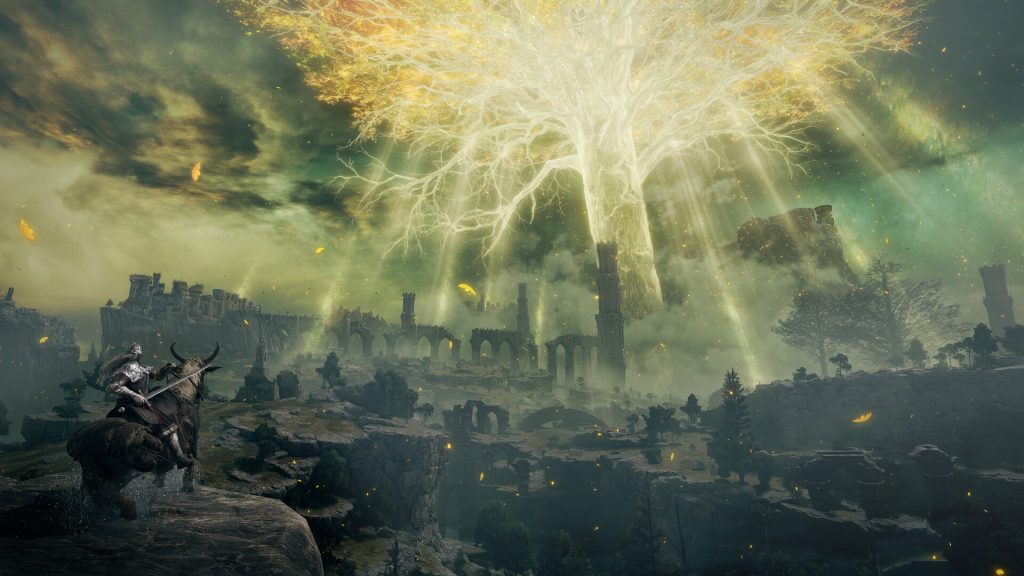
The Lands Between is covered by a patchwork of regional maps. Each one is a physical item resting on the ground at a fixed spot, usually at the foot of a carved stone pillar. Because the pillar is tall and pale, it reads clearly against grass, ash or snow, and it is visible from a distance once you know the silhouette. Ride toward it, dismount if you need to, and press the pickup prompt.
Two things confuse new players. First, the map does not reveal because you crossed a border; borders are invisible and irrelevant. Second, the fragment does not reveal the whole continent. It reveals its own region, and neighbouring regions stay fogged until you find their fragments too. If a region looks partially drawn, you are seeing the edge of a fragment you already own, not a bug.
Once a fragment is collected, the region’s terrain, roads, ruins and Site of Grace icons appear on the world map. The reveal is permanent for that playthrough, so there is no upkeep and no reason to delay picking one up when you pass it.

The surface regions and where their monuments sit
Rather than memorising coordinates, learn the pattern: monuments sit on the main road into a region, on the ridge above a region’s entrance, or just outside a major landmark. That single rule covers almost every surface fragment in the game.
- Limgrave: the opening region’s monument stands close to the road north of the Church of Elleh, near the Gatefront area. You can collect it within minutes of leaving the tutorial cave.
- Weeping Peninsula: cross the bridge south of Limgrave and follow the road; the monument sits along the approach before the peninsula’s main ruins.
- Liurnia of the Lakes: the lake region is split into more than one fragment, because it is large and flooded. Expect monuments on the eastern approach, near the northern lakeside settlements, and around the western cliffs by the Three Sisters.
- Altus Plateau: the plateau has a monument near its main road gate and another covering the Capital Outskirts approach. Reaching the plateau by the Grand Lift of Dectus or the Ruin-Strewn Precipice both work.
- Mt. Gelmir: a separate fragment from Altus, found along the winding mountain road rather than the plateau highway.
- Leyndell, Royal Capital: the capital has its own map piece tied to its outer walls and lower streets, with the inner city filling in as you explore.
- Caelid: the monument sits near the main road across the rot-scarred plains, close to the region’s first grace.
- Dragonbarrow: treated separately from Caelid, with its monument up the northern rise near the Great Bridge approach.
- Forbidden Lands: the narrow pass toward the mountains has a fragment on the climb, easy to miss if you sprint past on Torrent.
- Mountaintops of the Giants: monuments cover the southern approach and the frozen plateau around Castle Sol.
- Consecrated Snowfield: a hidden region reached by a secret medallion route, with its own fragment near the arrival point. If your map shows a blank white field, you have the region but not its fragment.
Using Torrent makes this circuit much faster, but ride slower than you think near region boundaries, because monument pickups do not auto-collect.
Underground maps are a separate set
The underground is the single most common gap in a “complete” map. Rivers, eternal cities and buried palaces are drawn on their own layered maps, and surface fragments never reveal them. Look for fragments beside the underground grace points you reach by well, coffin or lift: the Siofra River basin, Ainsel River, Nokron, Nokstella, the Lake of Rot shoreline, Deeproot Depths and Mohgwyn Palace all have their own pieces.
Practically, this means your overworld map can look finished while three underground layers are still fog. Open the map and use the layer switch to check. If a layer is fogged, that is a fragment you have not picked up, not a locked area you cannot reach yet.
What a fragment does not do
A fragment reveals terrain, not content. It does not mark catacombs, caves, evergaols or field bosses; those markers only appear when you physically approach or clear them. It does not reveal item locations, and it does not grant fast travel. Fast travel comes from touching a Site of Grace, so a fully drawn map with no graces still leaves you walking.
Fragments also do not stack across playthroughs in the way players expect. If you start New Game Plus and the map looks fogged again, that is normal; you re-collect them in the new cycle.
A sensible collection order
Follow the main story path and pick up each region’s fragment as you enter it. Limgrave, Weeping Peninsula, Liurnia, Altus Plateau, Mt. Gelmir, Leyndell, Caelid, Dragonbarrow, Forbidden Lands, Mountaintops, then Consecrated Snowfield. Then, once you have access to the underground, sweep those layers separately: Siofra, Ainsel, Nokron, Nokstella, Lake of Rot, Deeproot, Mohgwyn.
Two clean-up passes are usually enough. On the first pass, open the map after each region and check for fog on the region’s edges; fog at a border usually means the neighbour’s fragment is missing. On the second pass, switch to the underground layer and do the same. Mark suspicious blank patches with a map beacon so you can return without re-reading a guide.
Common mistakes worth avoiding
- Riding past a monument at full speed and assuming the pickup was automatic.
- Searching a region’s centre instead of its entrance road.
- Confusing the pale guide statues that point at dungeons with map monuments. Guide statues are smaller, glow faintly and emit a wisp; map monuments are plain carved pillars.
- Expecting Shadow of the Erdtree fragments to fill in base-game fog. The expansion’s map is separate content behind its own access route.
- Assuming a fogged area is a locked area. Usually it is a missing fragment in a region you can already walk through.
FAQ
Do I need to beat a boss to take a map fragment?
No. Fragments are ordinary ground pickups. Guards and patrols nearby may attack you, but you can grab the fragment and leave, or clear the area first if you prefer a calm approach.
Why is my map still fogged after I explored a whole region?
You have explored the ground but not collected that region’s monument fragment, or you are looking at a different map layer. Check the layer switch first, then retrace the region’s main road.
Do map fragments carry into New Game Plus?
The world map’s reveal state resets with the world, so expect to re-collect fragments in a new cycle. Treat it as a fast circuit rather than a chore, since you already know where each monument stands.
Does a fragment reveal underground areas?
No. The underground uses its own layered maps and its own fragments. Surface progress and underground progress are tracked separately.
Next steps
If you are still early in the game, pair this route with the Crafting Kit so you can brew boluses and throwables while travelling, and read poison and scarlet rot cures before you push into Caelid, where the rot is thickest. Players planning a long run should also skim New Game Plus preparation so nothing valuable is left behind when the cycle resets.