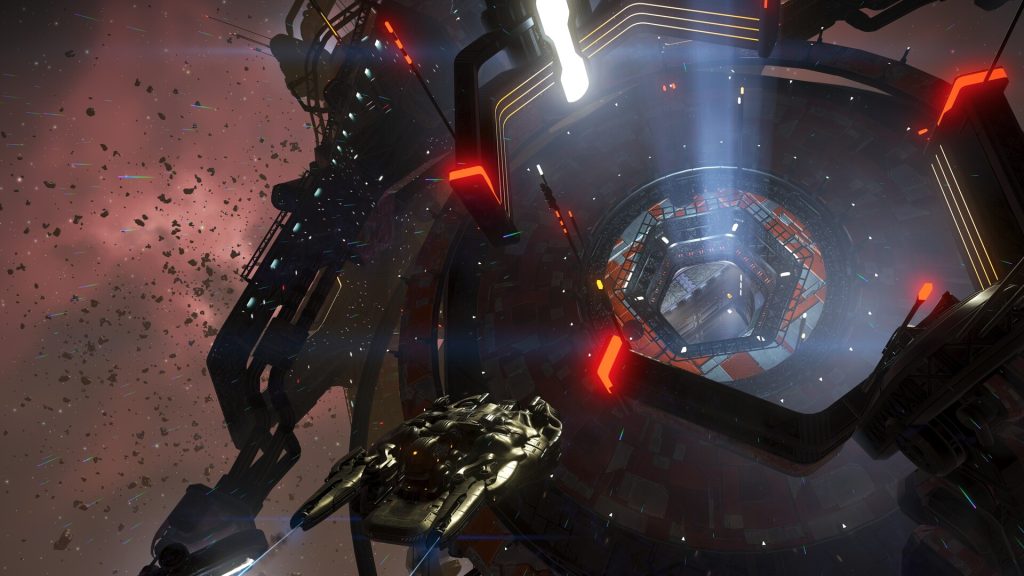
Quick answer: The Space Anomaly is your hub for blueprints, upgrades and multiplayer. Once unlocked through the story you can summon it from the quick menu in any system, and inside you will find research terminals that sell construction and technology blueprints, vendors who take nanites for upgrade modules, the Nexus mission board, a teleporter, and Nada and Polo. The three things worth doing first are buying Salvaged Data blueprints, spending nanites on S-class modules, and checking the Nexus for missions that pay Quicksilver.
New players often visit the Anomaly once, get overwhelmed, and never go back. That is a costly habit: the Anomaly is where the game’s upgrade economy lives, and almost every “why can’t I build that” or “where do I get a better module” question resolves inside it.
How do you unlock and summon the Anomaly?
The Anomaly is unlocked through the main story, early enough that most players reach it in their first few hours. Once you have visited it, it becomes summonable: open the quick menu in space and call it in, and it appears in your current system.
Summoning it anywhere is the key convenience. You do not have to fly to a specific system to use it, which makes it a mobile shopping centre and a mobile teleporter hub. If you are deep in an unexplored region and need a blueprint, you do not have to travel home.

What is actually inside?
| Area | What you do there | Currency |
|---|---|---|
| Construction research terminal | Buy base-building parts and structures | Salvaged Data |
| Technology merchants | Buy upgrade modules for suit, ship and multitool | Nanites |
| Nexus mission board | Take missions, including Quicksilver missions | Rewards on completion |
| Quicksilver merchant | Buy cosmetic items and special rewards | Quicksilver |
| Nada and Polo | Story dialogue and special technology offers | Varies |
| Teleporter | Travel to your bases and featured bases | Free |
The two currencies that matter are Salvaged Data and nanites. Salvaged Data comes from buried technology modules you dig up on planets; nanites come from scanning, missions, and refining certain materials. Both are earned by playing, and both are spent here.
What should you buy first?
Construction blueprints. The base parts you actually want — refiners, extractors, storage, better rooms — are locked behind Salvaged Data purchases. Until you buy them, your base is a shelter with lights. Digging up modules and converting them into parts is the single highest-value loop in the early game.
Then S-class modules. Upgrade modules bought with nanites come in classes, and the difference between a C-class and an S-class module is large. Buying one good module beats buying three mediocre ones, and modules for your exosuit’s hazard protection and jetpack change how the game feels.
Then Quicksilver. Quicksilver is earned from Nexus missions and spent on cosmetics and special items, including the Void Egg that starts the living ship quest. It is a slow currency, so start accumulating it early even if you do not want the rewards yet.
How do Nexus missions work?
The Nexus board offers missions you can take alone or with other players. They range from simple fetch and build tasks to combat and exploration objectives, and completing them pays units, nanites and Quicksilver depending on the mission.
Quicksilver missions are the ones to watch. They are limited in how often they refresh, so checking the board whenever you visit is worth the ten seconds. If you are working toward a living ship, this is your only realistic income of the currency it costs.
Missions can be done solo, which matters if you play without a subscription service on console or prefer to avoid multiplayer. You do not need other players to use the board.
What do Nada and Polo actually do?
They are the Anomaly’s story characters and its most useful vendors. Talking to them advances a storyline about the nature of the galaxy, and Polo in particular offers technology and items in exchange for data you have gathered — scanning, discovery and milestone progress all feed into what he can offer.
The practical habit is to talk to both every time you visit. Their dialogue and offers update as you progress, and skipping them means missing free or cheap technology that would otherwise cost nanites.
Can you use the Anomaly as a travel hub?
Yes, and this is underused. The Anomaly’s teleporter lists your bases and featured bases from other players, which means summoning the Anomaly in deep space gives you a free route home. That turns a long return flight into two loading screens.
It also means the Anomaly is a safe place to park. Nothing attacks you there, your ship is repaired on landing in the hangar, and you can reorganise your inventories without hazard pressure.
Common questions
Do I need PlayStation Plus or Xbox Live to use the Anomaly? You need it for multiplayer features, but the Anomaly itself and its vendors work solo.
Can I summon the Anomaly in any system? Yes, once unlocked. It appears in your current system when called.
Where do I get Salvaged Data? Dig up buried technology modules on planets with the terrain manipulator. It is the most reliable source.
Is the Anomaly the same as a space station? No. Stations have their own vendors and a teleporter, but the Anomaly holds the research terminals and the Nexus, which stations do not.
Should I visit every time I am in a system? Visit whenever you need blueprints, modules or missions. There is no cost to summoning it and no penalty for checking the board.
The Anomaly’s blueprints are what make a base worth building: how to build a base covers the construction side, powering a base covers the machines you unlock there, and the living ship guide explains what the Quicksilver is actually for.