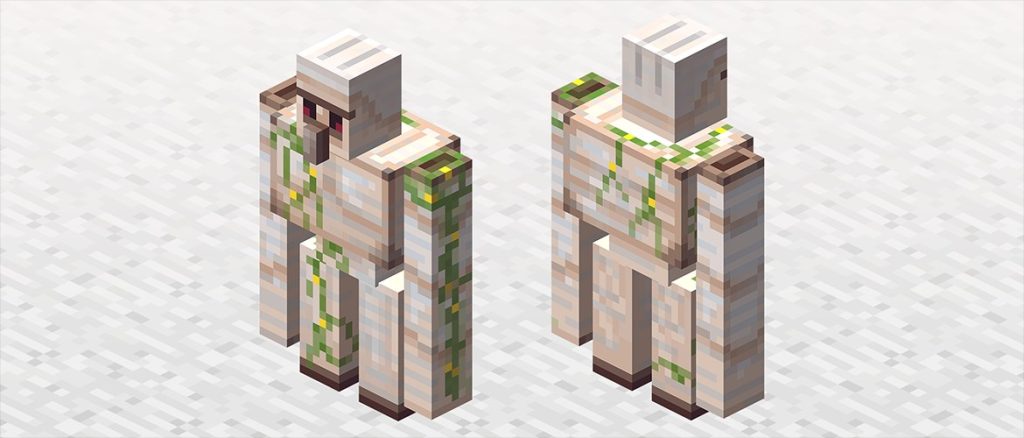
TL;DR: First confirm whether the design is for Java or Bedrock, then stay close enough for it to operate and inspect where golems actually appear. Java farms need eligible villagers with recent sleep and no interfering nearby golem. Bedrock farms need a valid village population, bed links, working villagers, and a usable spawn area.
Minecraft iron farm not working? Diagnose the edition and the symptom before rebuilding. A farm that spawns golems outside the collection platform has a different fault from one that never produces a golem. A chest that stays empty can also mean collection failed while the spawning mechanism is working.
This checklist covers ordinary modern village-based farms. Check the exact release requirements of an older design or a modded server before applying any numerical rule.

On this page
Minecraft Iron Farm Not Working: Separate Java and Bedrock
| Check | Java baseline | Bedrock baseline |
|---|---|---|
| Villager arrangement | Eligible group: typically three for panic summoning, five for gossip | At least ten villagers in a qualifying village |
| Beds | Villagers must have slept recently | At least twenty beds; all residents linked to beds |
| Workstations | Not a standard modern summoning requirement | At least 75% of the relevant villagers must have worked |
| Zombie scare | Useful in panic designs, with sleep access preserved | Not a substitute for village, bed, and work conditions |
| Spawn reference | Eligible summoning villager | Village center |
Do not blend the columns into one oversized farm. Adding twenty beds to a Java panic setup is not a general repair, and adding a zombie to a Bedrock village does not supply missing work links.
1. Confirm the Tutorial’s Edition and Release
Read the design’s description, not just the title or material list. Similar-looking villager chambers can use different mechanics. If you copied a Java layout into Bedrock, stop trying to tune it as though the underlying rules were identical.
Check whether the creator specifies a release, simulation setting, villager count, or timing requirement. A design that depends on a particular bug can fail after an update even when every block matches the screenshot. Use an appropriate design for your installed rules.
2. Stay Nearby and Watch a Full Operating Cycle
Remain near the farm through the relevant work and sleep periods. Visible terrain is not proof that all entities and village logic are ticking. Render distance and simulation distance are different settings, so seeing the platform from a distant tower does not guarantee it is operating.
Try a simple nearby observation point before changing the build. On a server, loading and ticking policies can differ from your single-player settings. Ask the owner about those policies if the farm only stops when players leave the area.
3. Look for Golems Outside the Kill Chamber
Inspect nearby ground, roofs, caves, ledges, and the underside of the build. If golems appear elsewhere, spawning is already happening. Your next job is fixing the available spawn surfaces or the reference point, not adding more villagers.
Java villagers normally stop summoning while they detect a nearby golem. The documented detection check extends sixteen blocks along the coordinate axes from the villager. A golem trapped below the platform or standing beside the chamber can therefore interrupt a setup that previously worked.
Remove the stranded golem safely and watch the next cycle. Then correct the route so its replacement reaches the collection area and leaves the relevant detection space. If you only remove it once, the same fault can return with the next spawn.
4. Restore Java Villagers’ Sleep Access
Ordinary Java summoning requires participating villagers to have slept within the previous twenty minutes. A permanently visible scare mob can keep a panic farm active briefly and then stop it when sleep eligibility expires. The beds can look correct while the residents never actually use them.
Temporarily block the villagers’ view of the scare mob and observe the next night. Make sure the villagers can reach or use their intended beds under the design’s arrangement. Once they sleep, restore the intended scare timing rather than leaving them permanently blocked from rest.
Also protect the scare mob and the villagers from escape or death. A missing zombie, dead parent, or resident moved beyond the participating group changes the farm even though the platform itself has not moved.

5. Recheck Bedrock Population and Bed Links
A normal Bedrock village-based iron farm needs at least ten villagers and twenty beds. All residents in the relevant village must be linked to beds. Extra residents from an expanding breeder or trading hall can turn a previously sufficient bed arrangement into an incomplete one.
Count the residents actually belonging to the system, not only the ones in the chamber you intended to use. Beds and village-related blocks added nearby can also shift or complicate the village center. This can explain why golems suddenly appear on the ground after a base expansion.
Rebuild links deliberately if needed. Observe which residents respond as beds are added, and retest before replacing every block. A careful one-at-a-time repair is easier to interpret than removing the entire village in one operation.
6. Verify Bedrock Villagers Really Work
At least 75% of the relevant villagers must have been able to work during the previous game day under the documented normal rules. For a clear ten-worker test population, ensure at least eight actually reach and use their linked job blocks. Keep unemployed adults and nitwits out of that test population so the result is straightforward.
A workstation placed in front of a resident is not proof of ownership. Another villager may have claimed it, or the layout may prevent the owner from reaching it. Observe work behavior during working hours rather than treating profession clothing as enough evidence.
Use accessible stations and a layout that matches the tutorial. If the farm stopped after you changed job blocks, repair those links first. Adding more beds will not fix residents who cannot work.
7. Inspect Spawn Space and Platform Position
The documented normal spawn search is local, roughly a seventeen-by-thirteen-by-seventeen volume around the relevant Java villager or Bedrock village center. A platform outside the searched space can be beautifully built and still never receive a spawn.
Check the full area, including vertical placement and overhead obstructions. Golem spawn rules do not exactly match ordinary hostile-mob rules. A surface covered in torches, or a block that stopped another mob, is not automatically proven safe against golem spawns.
Use an edition-confirmed spawn-proofing method or remove unintended eligible surfaces. Inspect the design’s block choices rather than substituting slabs, glass, or other blocks because they look similar. Water channels also need to move golems toward the kill chamber without trapping them at an edge.
8. Test Collection After Spawning Works
If a golem reaches the kill chamber and dies but the chest stays empty, inspect hoppers, water flow, item paths, and storage. A hopper can point the wrong way, be blocked, or feed a full container. That failure does not mean the villagers stopped summoning.
Drop an ordinary test item into the collection route and confirm it reaches the intended chest. This isolates transport without waiting for another golem. Then watch an actual spawn and kill so you can see whether drops enter the same path.
Frequently Asked Questions
Why did my Java farm work and then stop?
Check recent sleep, the scare mob, and a golem stranded nearby. A farm can begin with eligible villagers and later lose eligibility when they cannot sleep again.
Does a Bedrock iron farm need a zombie?
Not for the ordinary village-based mechanism described here. Meet its bed, population, work, loading, and spawn-space conditions first.
Will more villagers always make it work?
No. More residents can create new bed or work-link problems. First identify the failed condition with the intended population.
Why are golems spawning beside the farm?
There is an eligible surface outside the collection area, or the effective reference point differs from your planned layout. Inspect the whole local spawn area and village links.
Next step: Observe whether the failure is spawning, movement, or collection, then repair one corresponding condition. Use the breeder guide, trading guide, and Minecraft hub when adjusting neighboring village systems.
Sources and Version Notes
- Minecraft Wiki: Iron Golem, separate Java and Bedrock summoning, detection, loading, and spawn-space rules; readable source reviewed November 10, 2026.
- Minecraft Wiki: Villager, villager eligibility and job-site context.
- Minecraft: Meet the Iron Golem, official mob identification; not used as a farm recipe or rate benchmark.